Contents · Sections
Choose the form by what it must carry
A bag that is elegant empty but awkward when loaded has missed its purpose.
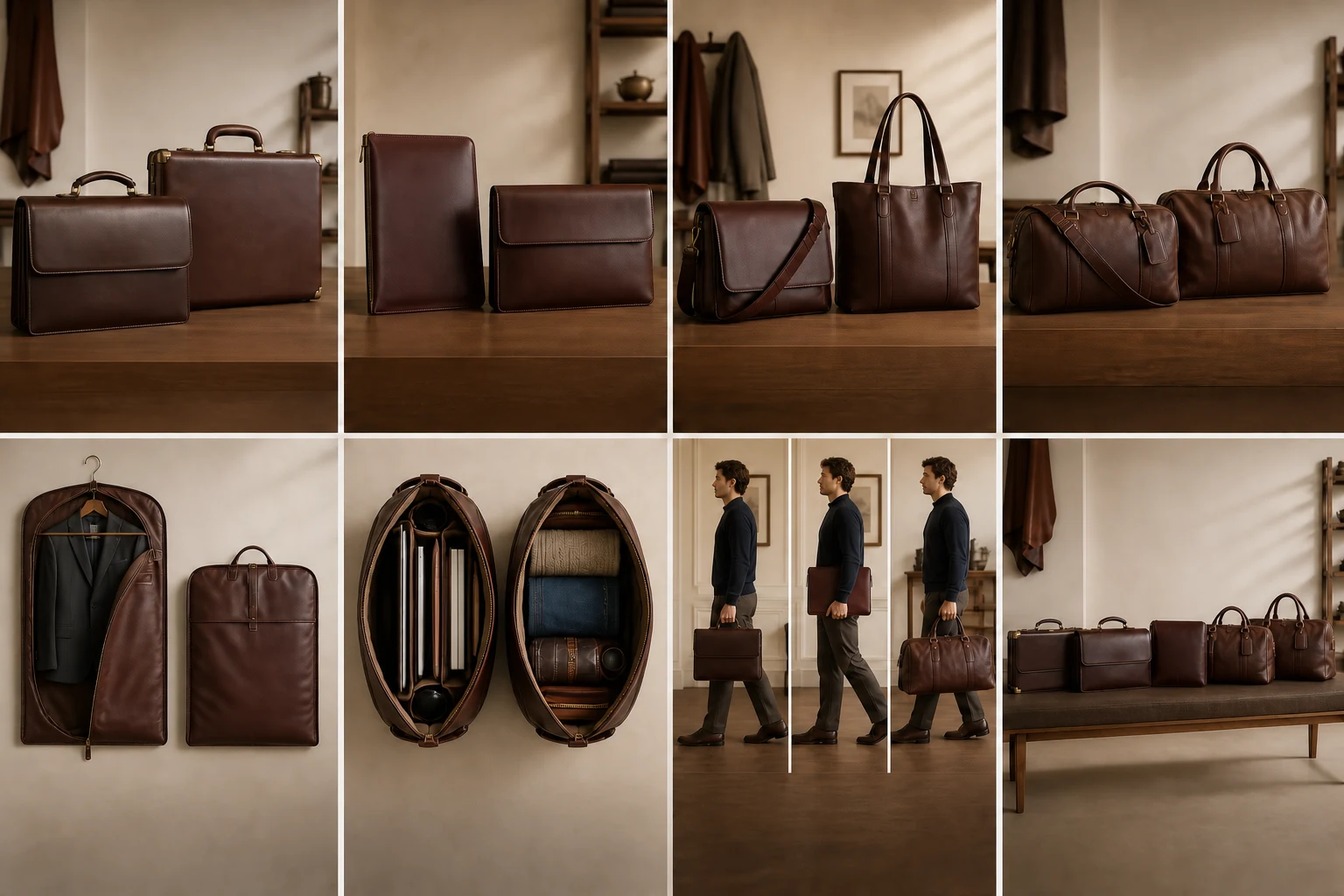
Compare the visible differences in choose the form by what it must carry: proportion, material, finish and behaviour in use.
A bag that is elegant empty but awkward when loaded has missed its purpose.
“Could you show me how the choices in choose the form by what it must carry change the result for my use, climate and preferred formality?”
Briefcase
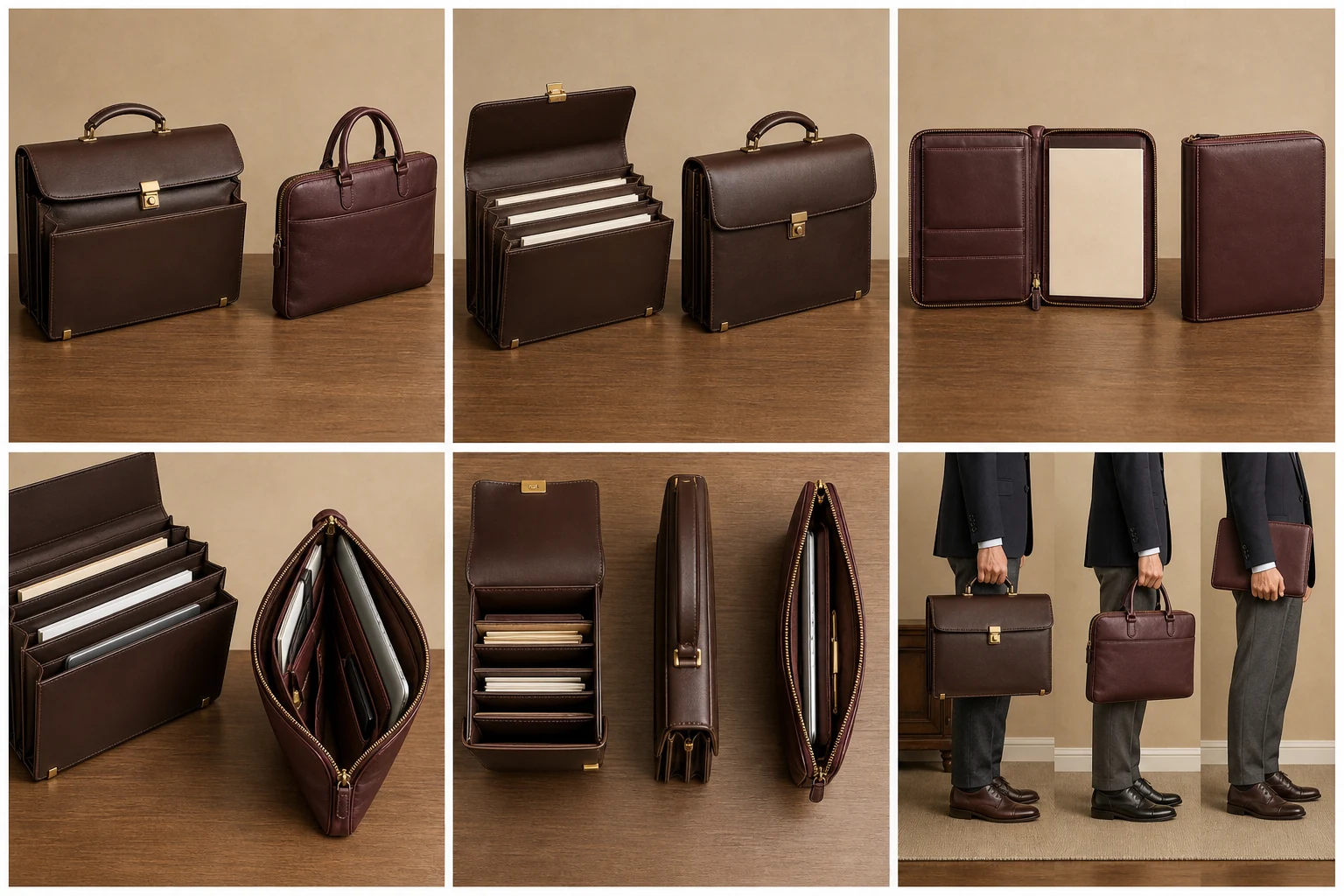
Structured cases protect documents and devices; softer cases weigh less and adapt to varied loads.
Portfolio
A slim folio carries papers and a small device with minimum bulk, but demands disciplined contents.
Travel bag
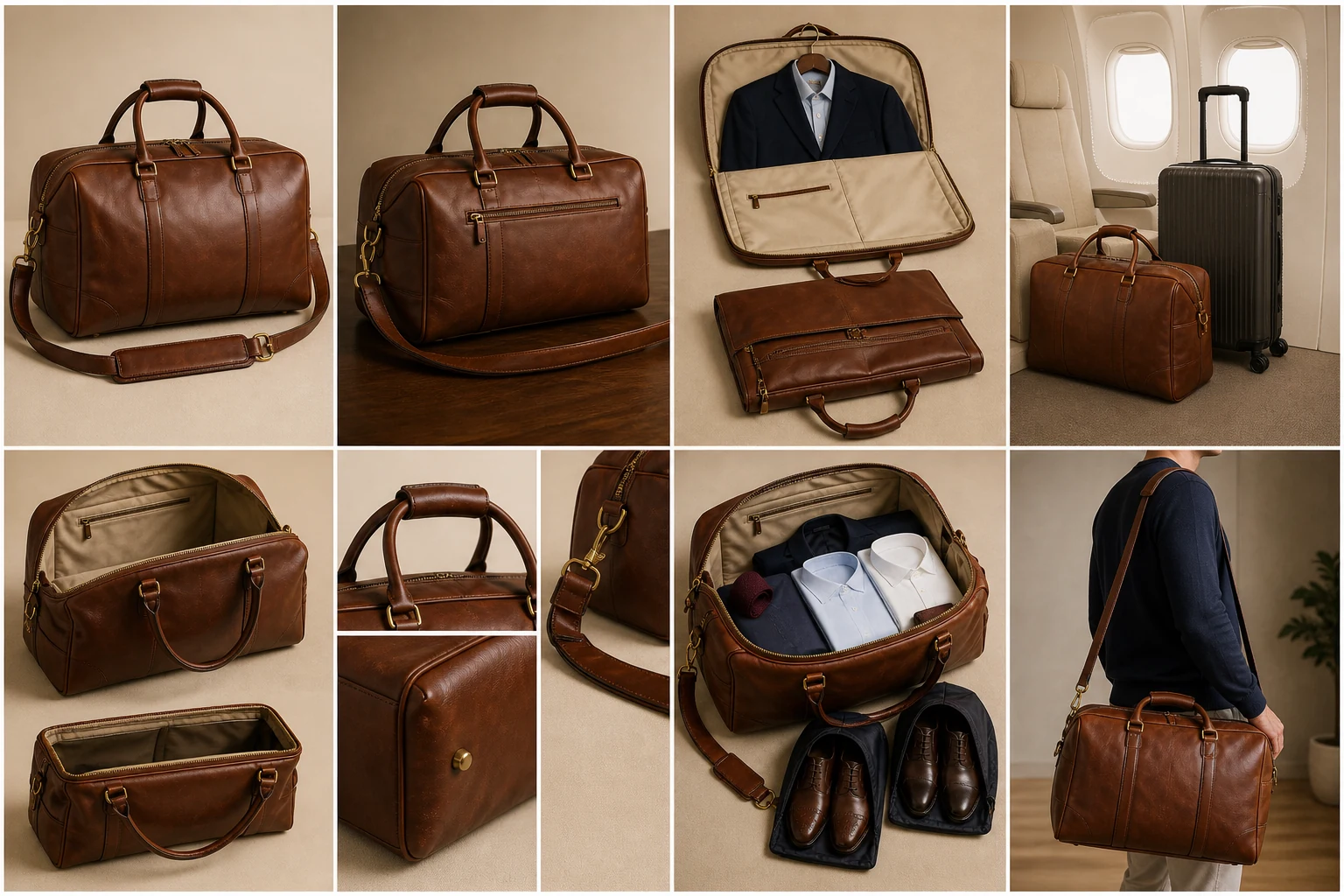
A duffel or holdall needs a stable base, comfortable handles, sensible opening and protection from overloaded hardware.
Small leather goods
Wallets, cardholders and document cases should suit what you actually carry, not the number of slots offered.
Shape, proportion and carrying comfort
Judge a bag both on the table and beside the body.
Compare the visible differences in shape, proportion and carrying comfort: proportion, material, finish and behaviour in use.
Judge a bag both on the table and beside the body.
“Could you show me how the choices in shape, proportion and carrying comfort change the result for my use, climate and preferred formality?”
Scale
Width should accommodate documents or devices without looking like luggage; depth should remain manageable in crowded spaces.
Handles
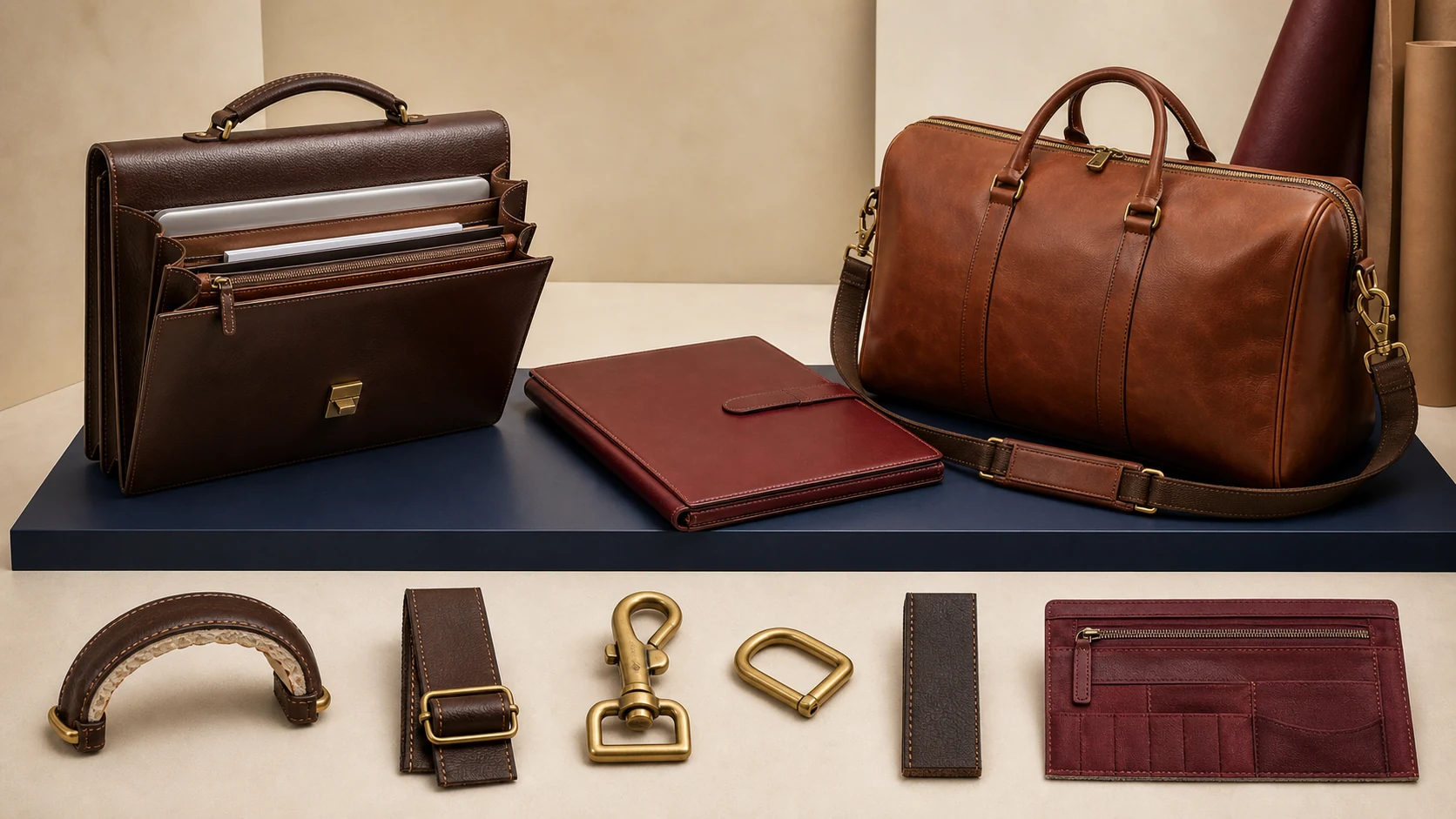
Look for rolled or layered handles with reinforced attachment points and enough drop for the intended grip.
Straps
A removable shoulder strap needs a broad, stable pad and anchors positioned to prevent the loaded bag from tipping.
Construction and hardware
Stress points tell the truth faster than decorative stitching.
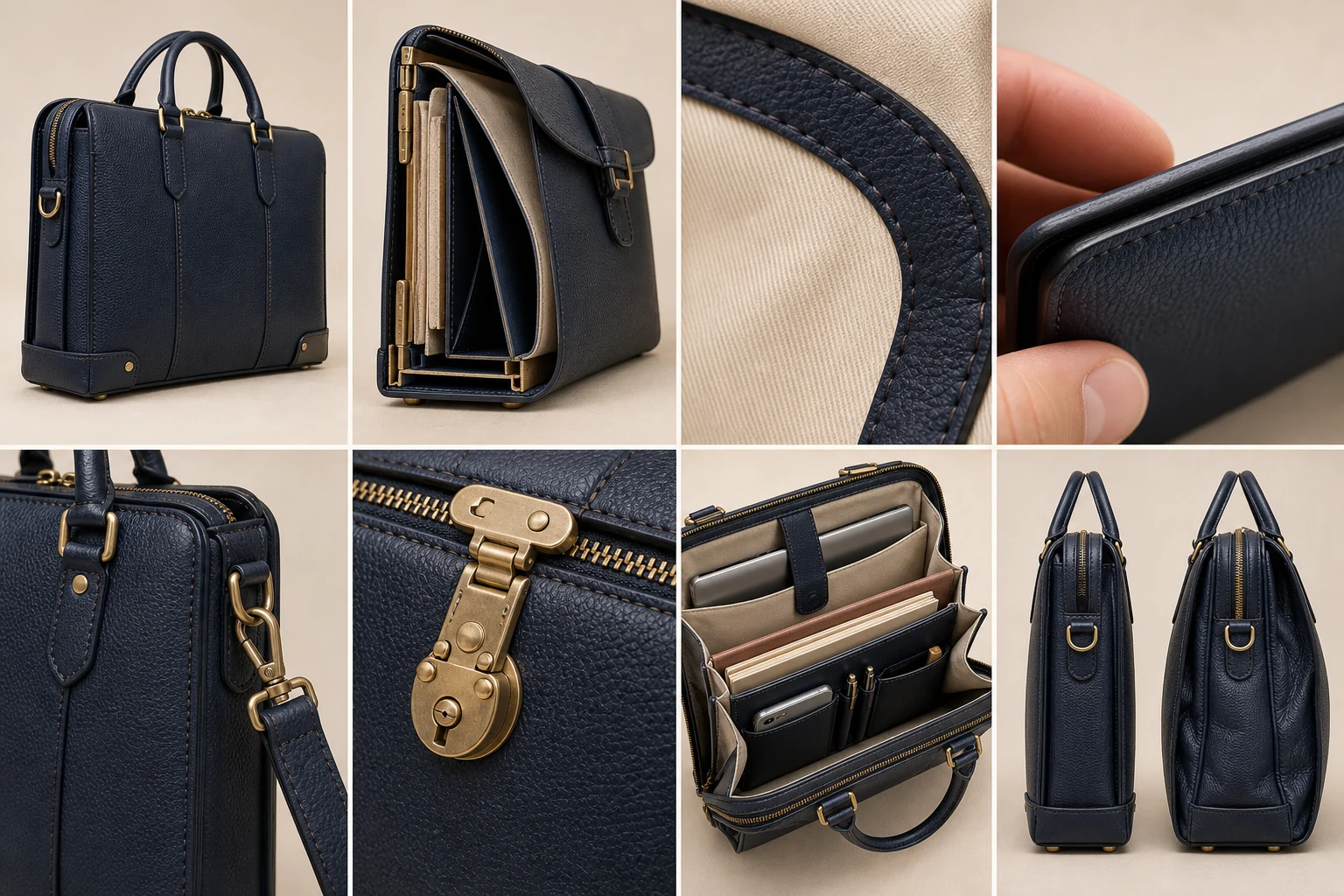
Compare the visible differences in construction and hardware: proportion, material, finish and behaviour in use.
Stress points tell the truth faster than decorative stitching.
“Could you show me how the choices in construction and hardware change the result for my use, climate and preferred formality?”
Seams and edges
Inspect stitch consistency, seam allowance, skiving, edge paint or burnishing, and reinforcement at corners.
Hardware
Zips should run smoothly; locks and buckles should align; plating should be even; feet must not create weak pressure points.
Lining
A light lining makes contents visible. It should be cleanly fitted, durable and replaceable where possible.
Organisation without excess
Useful compartments reduce friction; too many consume volume and dictate obsolete devices.
Compare the visible differences in organisation without excess: proportion, material, finish and behaviour in use.
Useful compartments reduce friction; too many consume volume and dictate obsolete devices.
“Could you show me how the choices in organisation without excess change the result for my use, climate and preferred formality?”
Daily layout
Prioritise a protected device sleeve, document space and a few accessible pockets for keys, pen and charger.
Security
Choose closure for context: open totes are quick, zips are practical, flap locks are formal but slower.
Travel
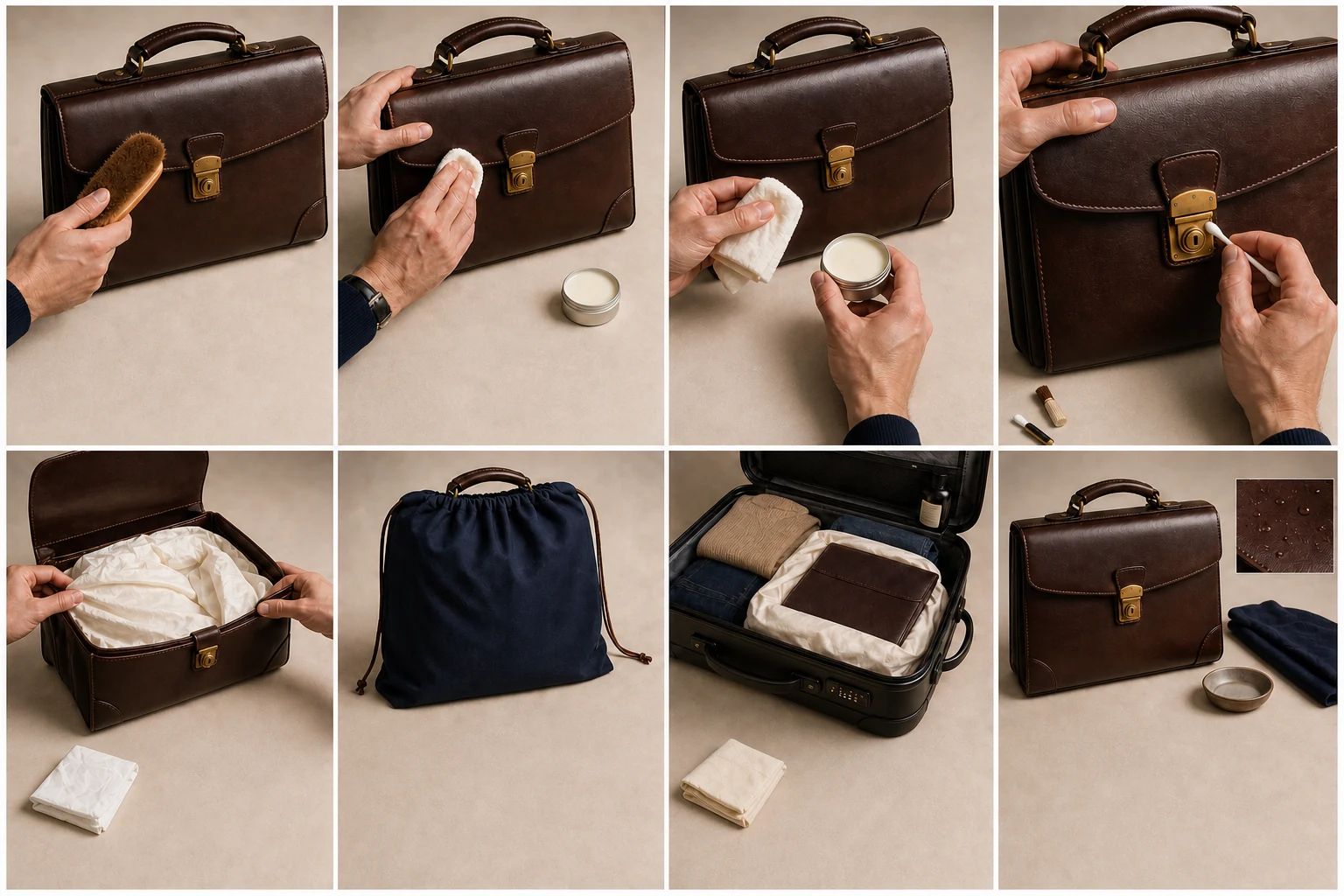
Keep identification secure, avoid exposed valuables and use a dust bag or protective layer inside luggage.
Leather, finish and ageing
Full-grain, corrected and coated surfaces age differently; none excuses weak construction.
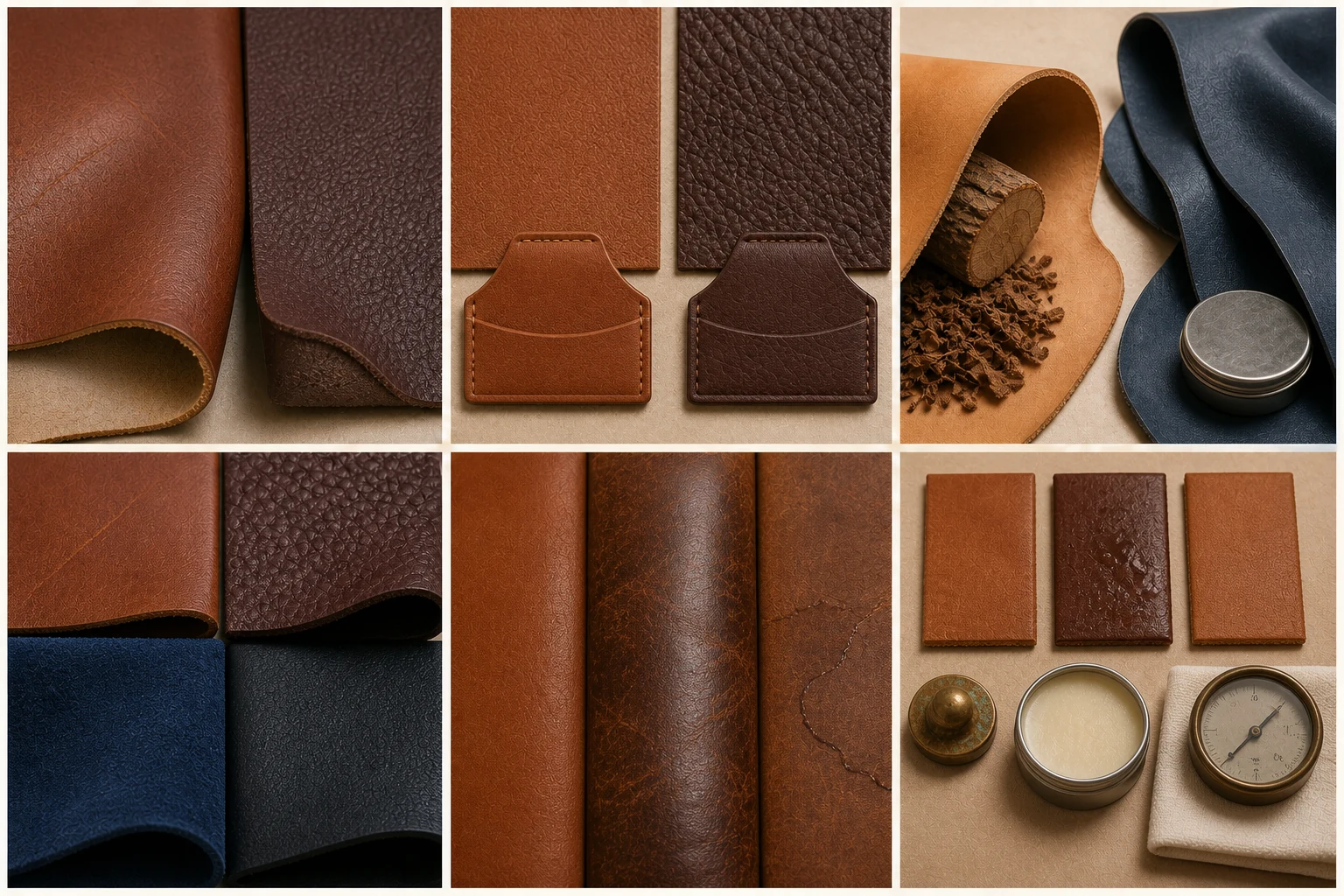
Compare the visible differences in leather, finish and ageing: proportion, material, finish and behaviour in use.
Full-grain, corrected and coated surfaces age differently; none excuses weak construction.
“Could you show me how the choices in leather, finish and ageing change the result for my use, climate and preferred formality?”
Vegetable-tanned
Often firm and responsive to light, handling and moisture, developing visible patina over time.
Chrome-tanned
Can be supple, colourfast and weather tolerant; quality varies widely by hide and tannery.
Grain and coating
Natural grain shows variation; corrected grain is sanded; heavy pigment or coating increases uniformity but changes repair and ageing.
What to ask a leather artisan
Ask how the object is built and repaired, not only what the leather is called.
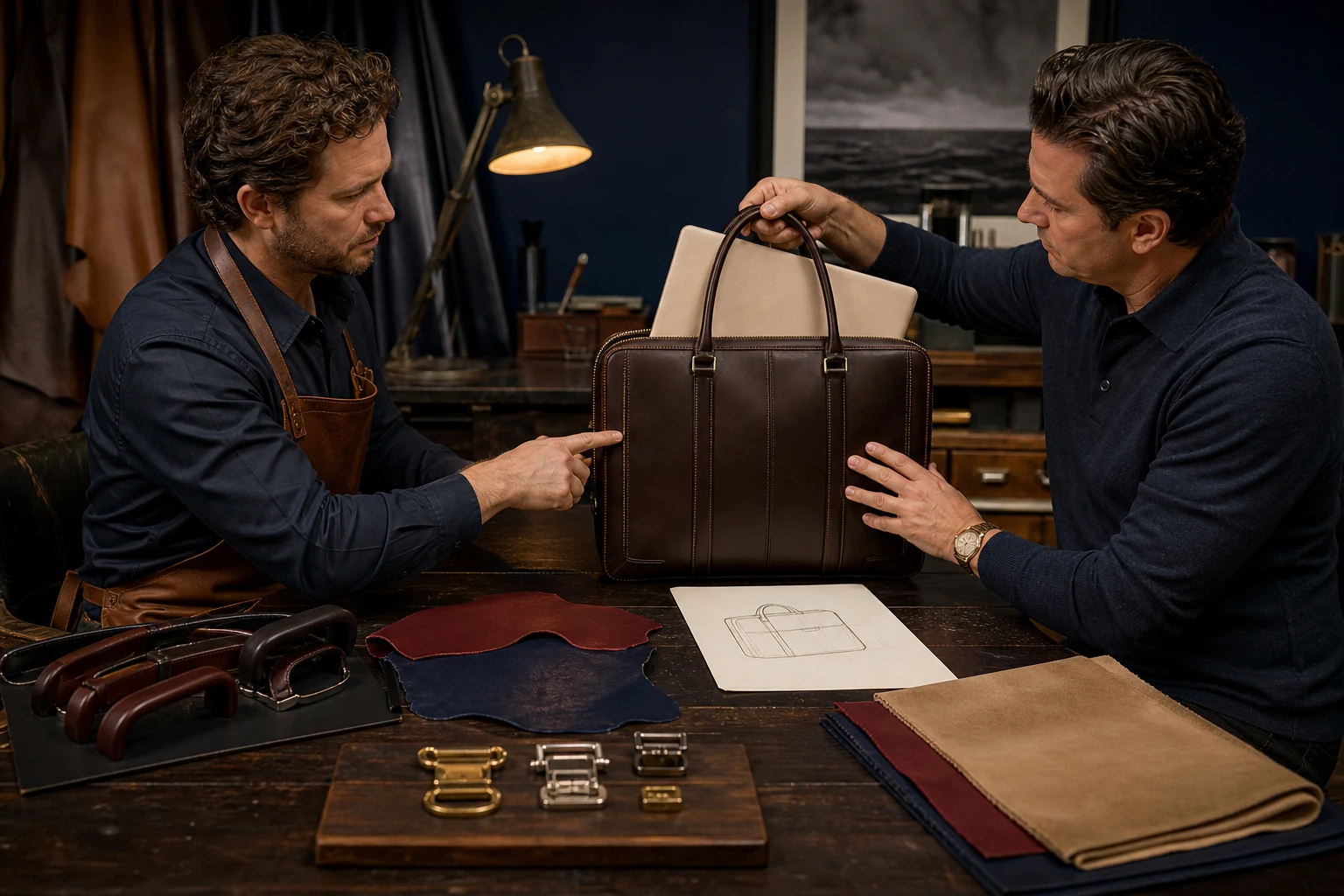
Compare the visible differences in what to ask a leather artisan: proportion, material, finish and behaviour in use.
Ask how the object is built and repaired, not only what the leather is called.
“What would you recommend for my use, climate and preferred formality—and why?”
Define the load
“It must carry a 14-inch laptop, A4 papers and a charger without collapsing.”
Ask about stress
How are the handles anchored? Can the zip, lining and edge finish be repaired?
Discuss climate
How will this finish react to humidity and rain, and what conditioner should be avoided?
Personalisation
Choose monograms and special hardware only after function, balance and future use are settled.