Contents · Sections
Silhouette and anatomy
Start with the whole suit: line, balance and purpose. Details should support that larger idea.
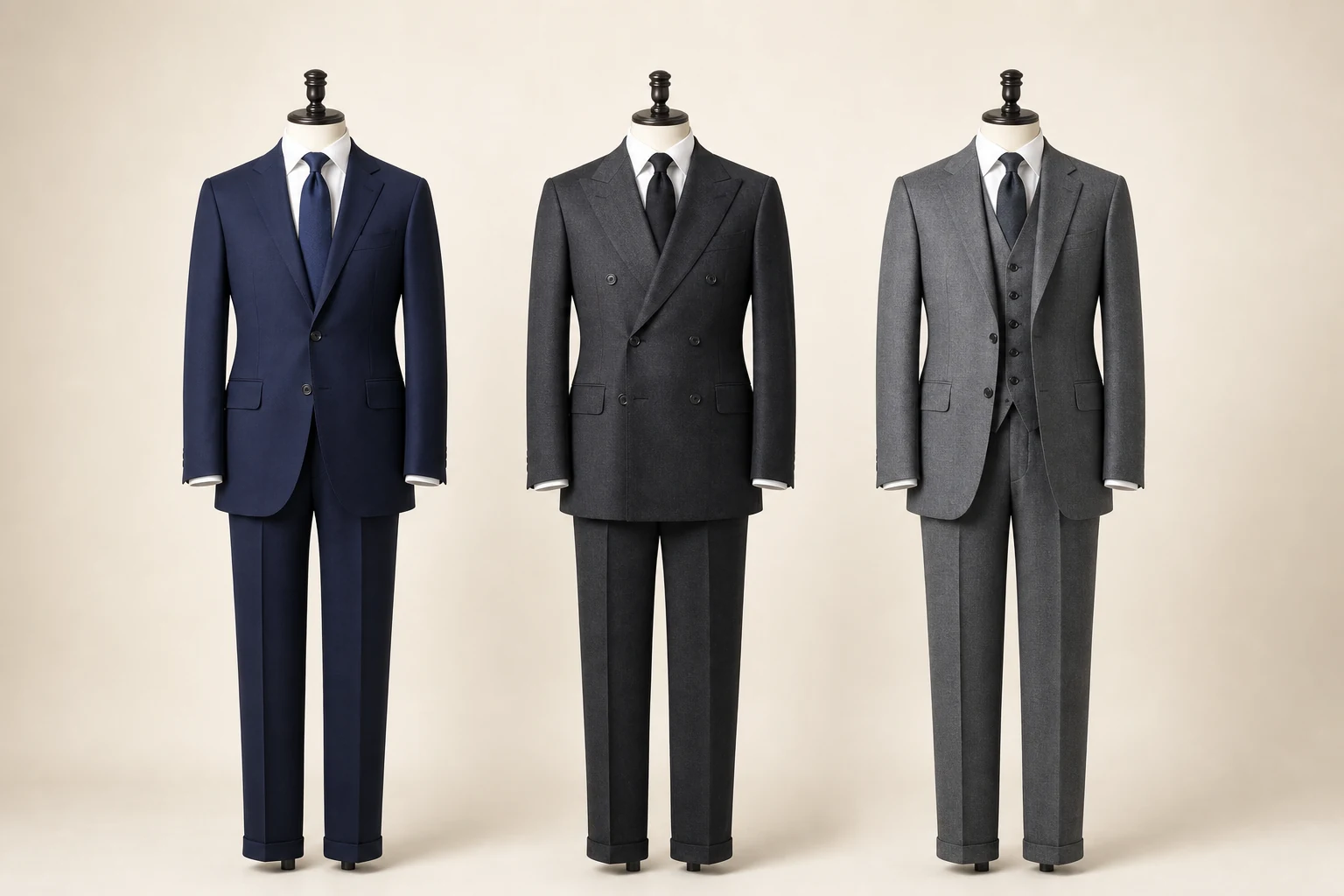
Compare the visible differences in silhouette and anatomy: proportion, material, finish and behaviour in use.
Start with the whole suit: line, balance and purpose. Details should support that larger idea.
“Could you show me how the choices in silhouette and anatomy change the result for my use, climate and preferred formality?”
Suit types
Single-breasted is adaptable; double-breasted creates a stronger, more formal front; dinner dress follows its own evening conventions.
Button stance, lapel line, skirt length and trouser rise.
Together they determine apparent height, width and formality.
I would like a balanced single-breasted suit for business use.
Jacket anatomy
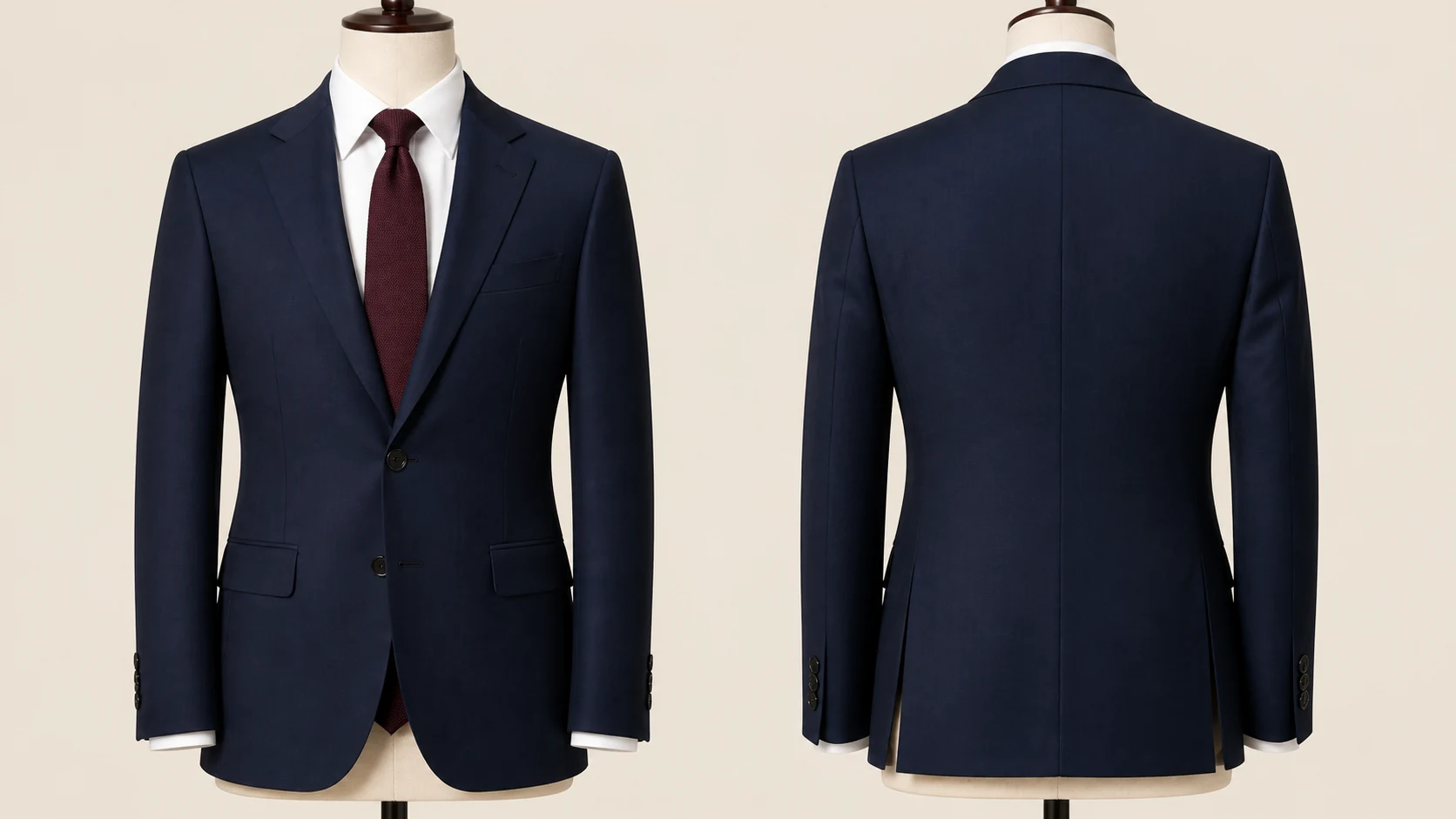
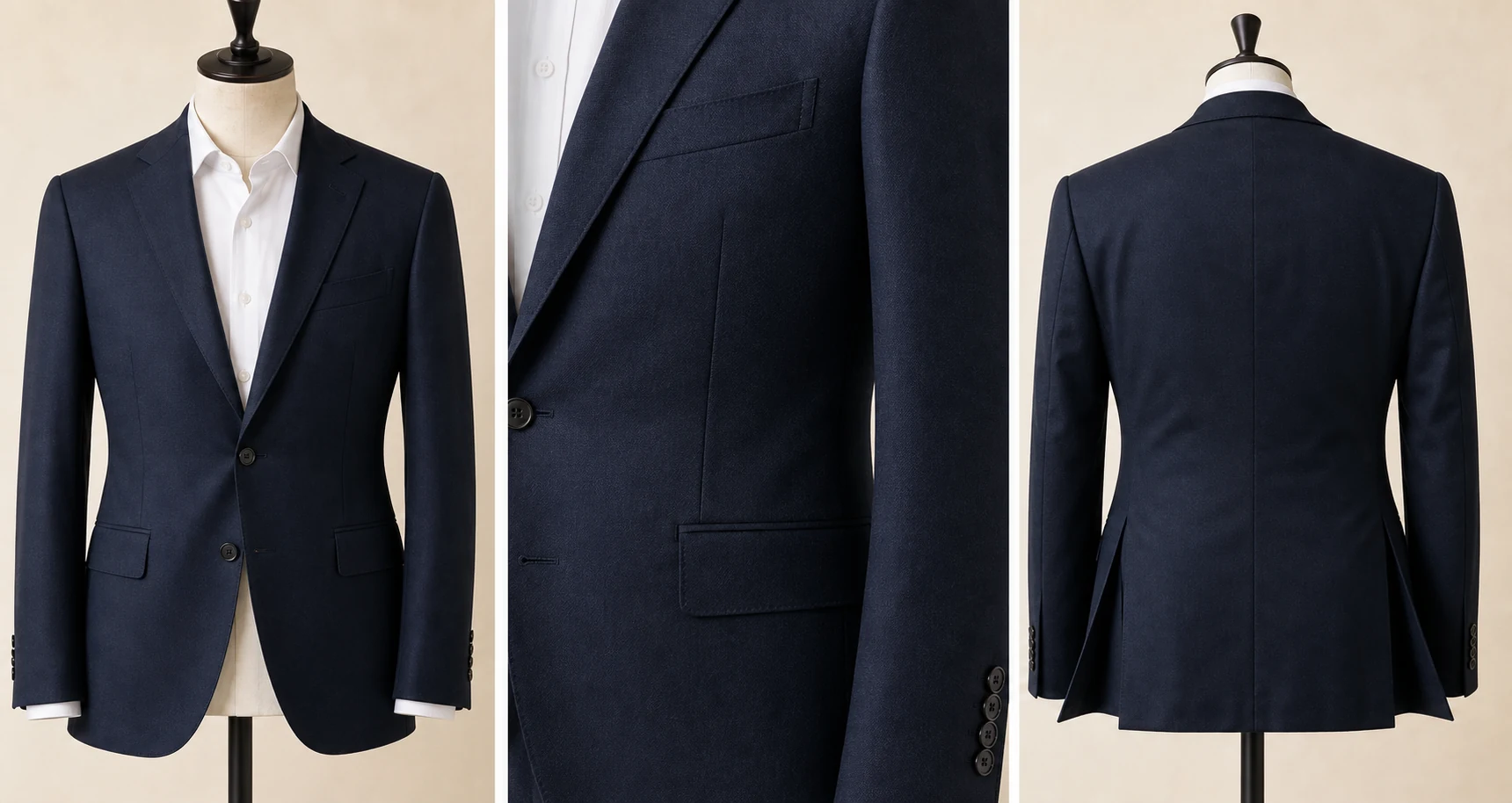
Collar, lapel, shoulder, chest, waist, quarters, pockets, sleeves and vents form one connected silhouette.
A collar that hugs the neck and fronts that hang without twisting.
Clean balance is more valuable than an isolated fashionable detail.
Trousers
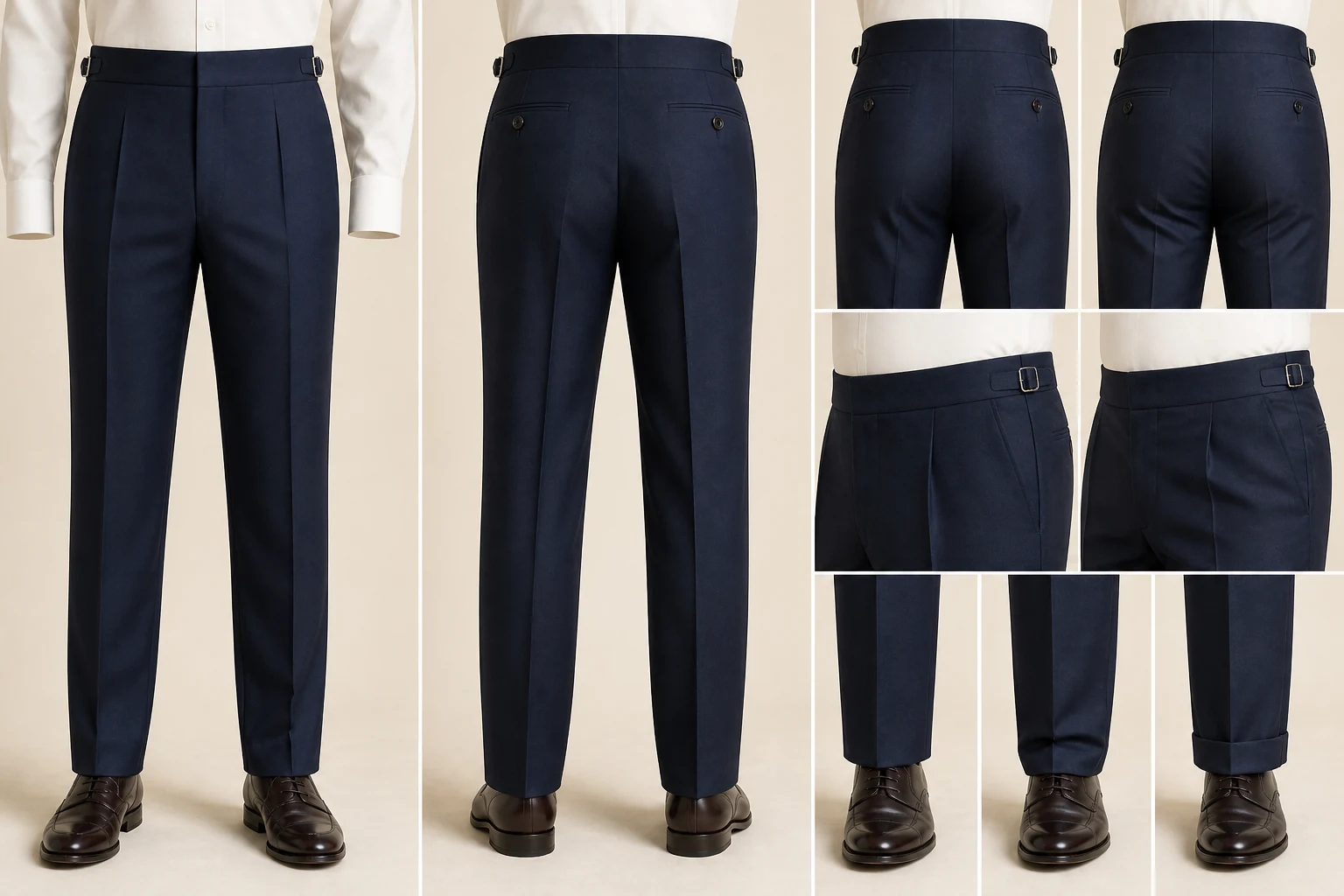
Waistband, rise, pleats, seat, thigh, knee, outseam and break govern comfort and the line into the shoe.
A level waistband and a crease that falls cleanly.
Good trousers move without collapsing into excess cloth.
Lapels, shoulders, pockets and vents
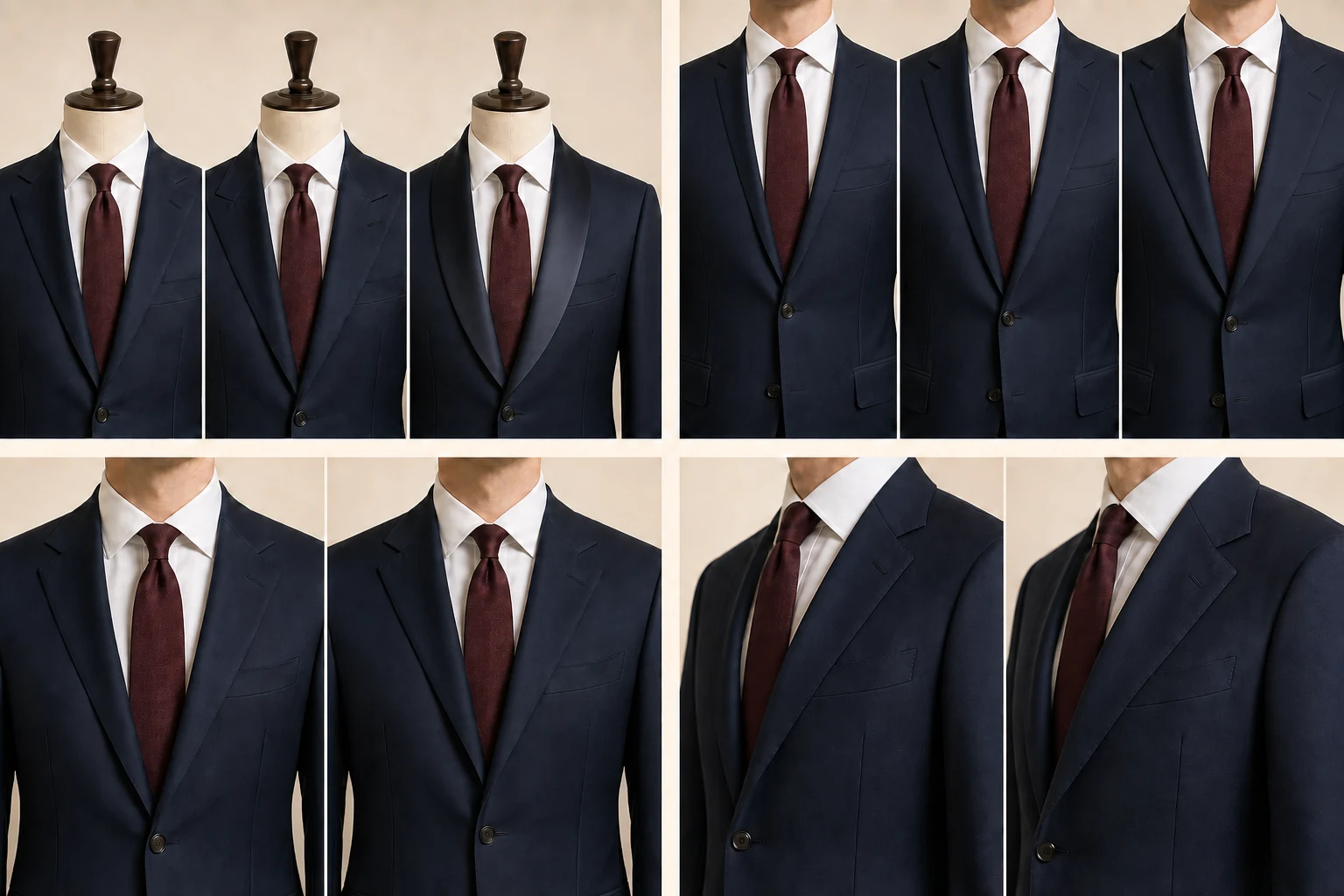
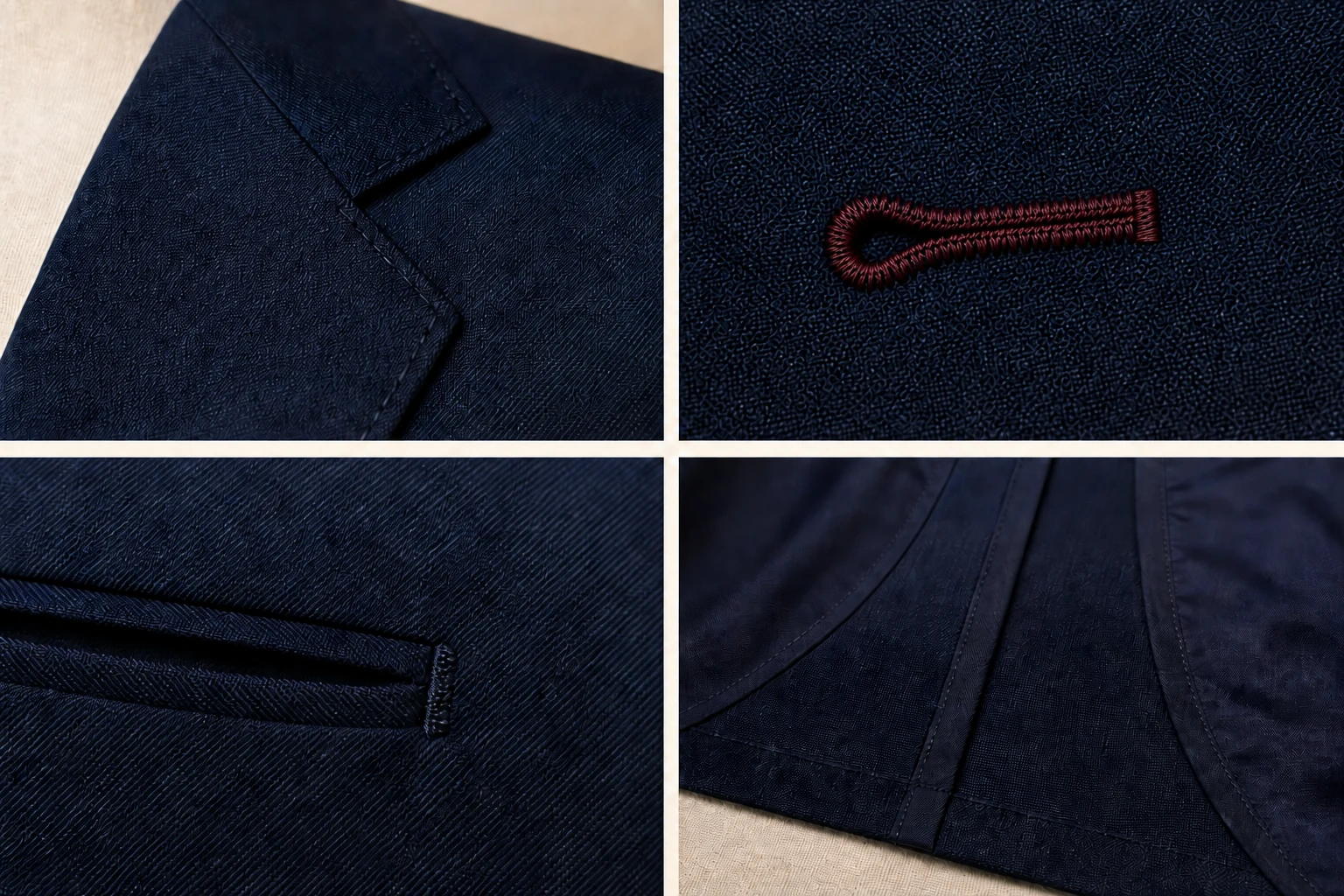
Small choices change the voice of a jacket. Compare them at full scale, then inspect the edge work.
Compare the visible differences in lapels, shoulders, pockets and vents: proportion, material, finish and behaviour in use.
Small choices change the voice of a jacket. Compare them at full scale, then inspect the edge work.
“Could you show me how the choices in lapels, shoulders, pockets and vents change the result for my use, climate and preferred formality?”
Lapels
Notch lapels are versatile, peak lapels project authority, and shawl collars make a continuous formal curve.
The gorge height, belly and width in relation to your chest and head.
Proportion matters more than following a number in isolation.
Could we compare a medium notch lapel with a slightly fuller belly?
Shoulder structure
Natural, soft, roped and extended shoulders differ in padding, sleeve-head expression and apparent breadth.
A clean line without dents, collapse or an exaggerated overhang.
The shoulder establishes the jacket’s architecture.
Pockets and buttons
Flap, jetted, patch and ticket pockets move from formal restraint to relaxed utility. Button material and spacing reward close inspection.
Level pockets, clean jets and secure shanks.
Details should match the garment’s intended formality.
Vents
No vent is clean but restrictive; a centre vent is simple; side vents preserve movement and pocket access.
Vents that remain closed when standing naturally.
Gaping usually signals balance or fit trouble.
Shirts, waistcoats and the layers beneath
The pieces nearest the body determine comfort, collar harmony and how the jacket settles.
Compare the visible differences in shirts, waistcoats and the layers beneath: proportion, material, finish and behaviour in use.
The pieces nearest the body determine comfort, collar harmony and how the jacket settles.
“Could you show me how the choices in shirts, waistcoats and the layers beneath change the result for my use, climate and preferred formality?”
Collars
Spread, point, button-down and one-piece collars frame the face differently and need space for the chosen tie knot.
Cuffs
Barrel cuffs are practical; double cuffs add formality and require links. Cuff circumference must clear the watch without swallowing the hand.
Shirt construction
Inspect the yoke, placket, gussets, seams, buttons and collar stays. Fit should permit movement without a billowing waist.
Waistcoats
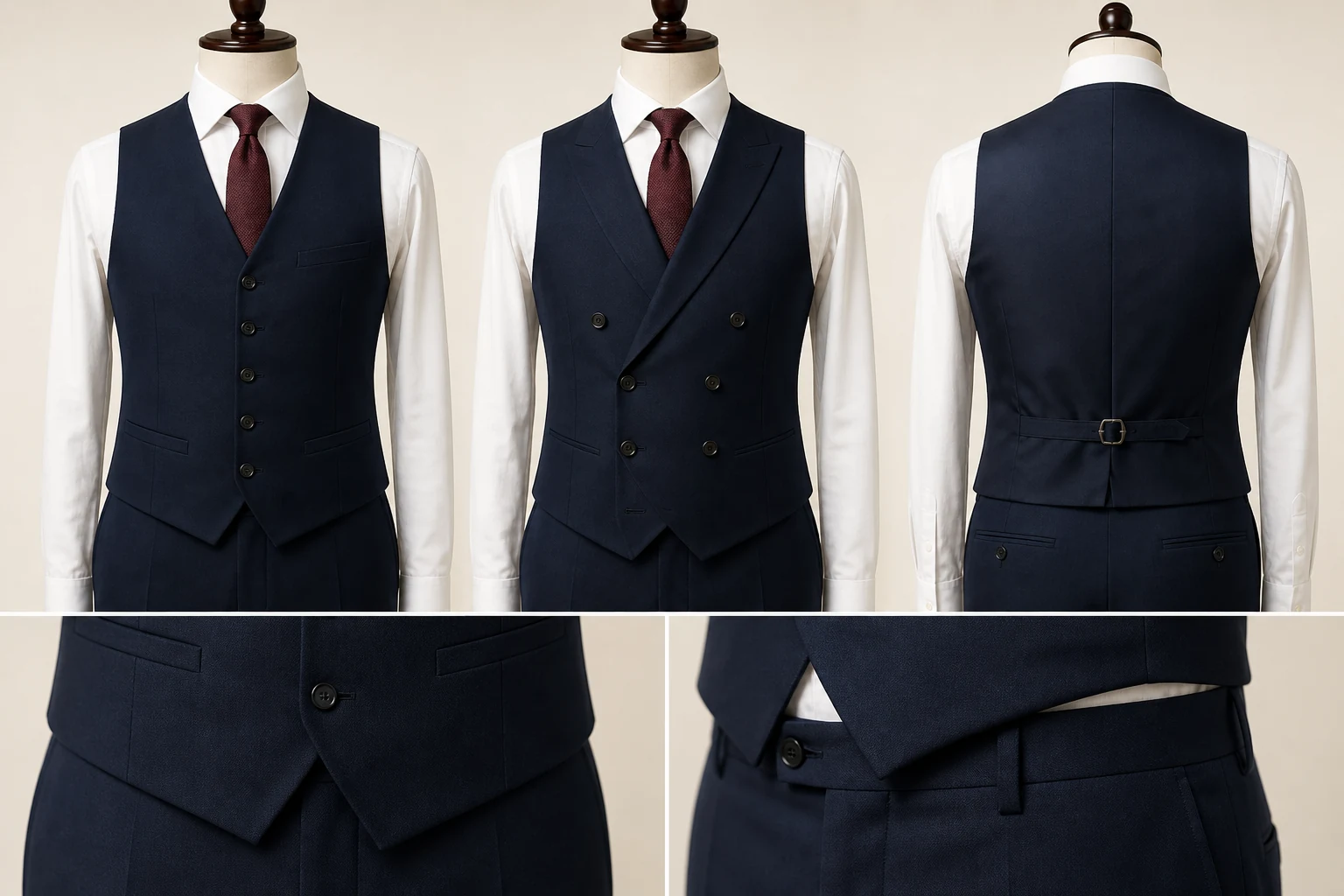
Single- or double-breasted waistcoats should cover the trouser waistband and remain calm when seated.
Cloth, weave, weight and climate
Fibre names are only the beginning. Handle, openness, recovery and weight tell you how cloth will live.
Compare the visible differences in cloth, weave, weight and climate: proportion, material, finish and behaviour in use.
Fibre names are only the beginning. Handle, openness, recovery and weight tell you how cloth will live.
“Could you show me how the choices in cloth, weave, weight and climate change the result for my use, climate and preferred formality?”
Fibre
Worsted wool is crisp and versatile; flannel is soft and matte; linen breathes and creases; cotton is sturdy; cashmere adds softness but needs care.
Weave and texture
Twill, hopsack, fresco, plain weave and brushed finishes change airflow, drape and visual depth.
Weight
Light cloth can breathe yet show wrinkles; heavier cloth often hangs cleanly but carries heat. Climate and air-conditioning both matter.
Occasion
Smooth dark cloth reads formal; open texture and visible weave relax the message. Choose for the room, not merely the season.
What is hidden inside the jacket
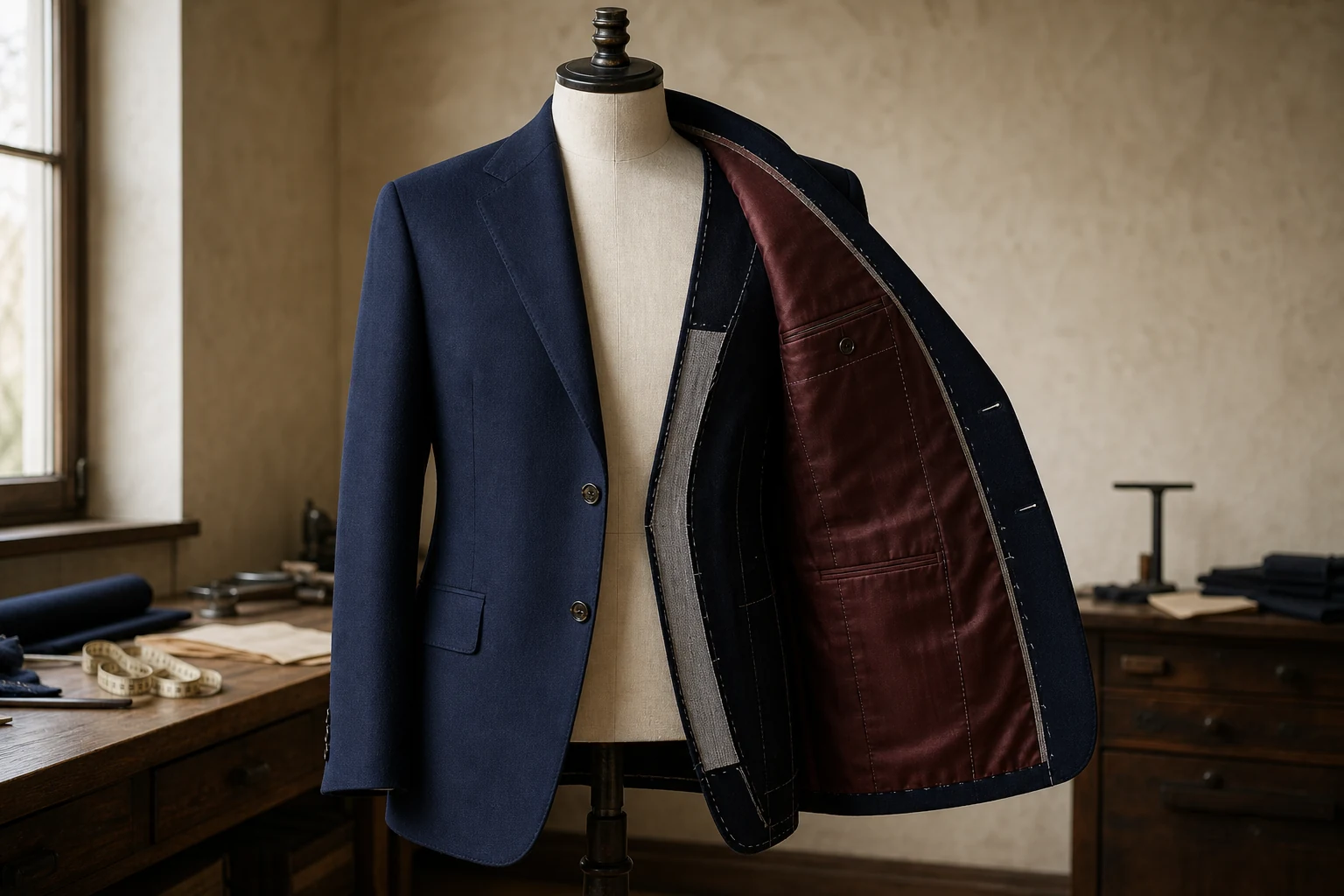
Construction shapes drape, durability, breathability and the way a jacket develops with wear.
Compare the visible differences in what is hidden inside the jacket: proportion, material, finish and behaviour in use.
Construction shapes drape, durability, breathability and the way a jacket develops with wear.
“Could you show me how the choices in what is hidden inside the jacket change the result for my use, climate and preferred formality?”
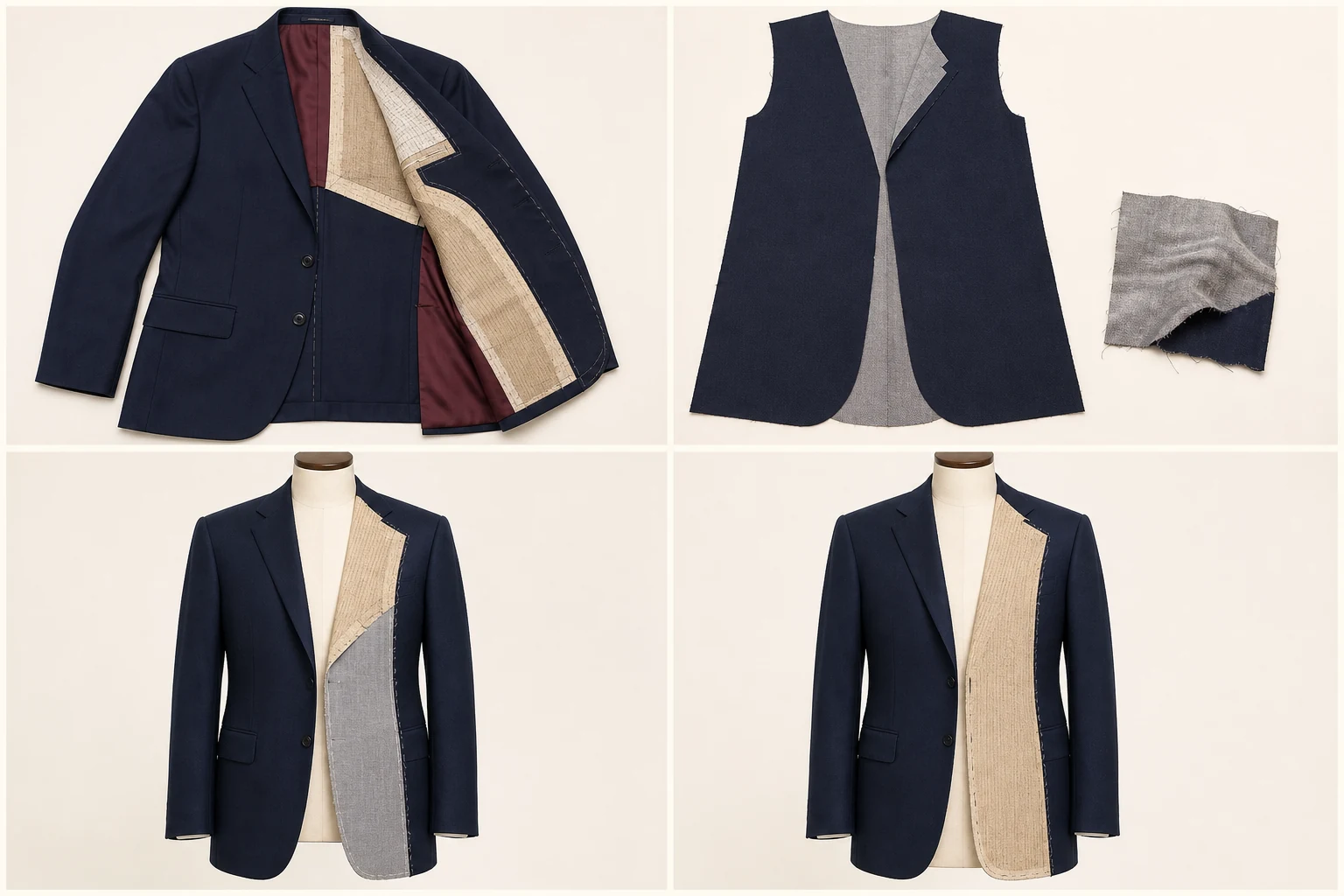
Fused
Adhesive supports the front. It is accessible and stable, though it usually moulds less naturally and can suffer from bubbling if poorly made.
Half-canvas
A sewn canvas supports the chest while the lower front is fused, balancing shape, cost and weight.
Full-canvas
A floating canvas runs through the front, allowing skilled shaping and a garment that can settle to the wearer over time.
Finishing
Lining, pick stitching, buttonholes, seam allowances and internal pockets reveal care, but decoration alone is not proof of sound construction.
Measurements, fittings and common fit problems
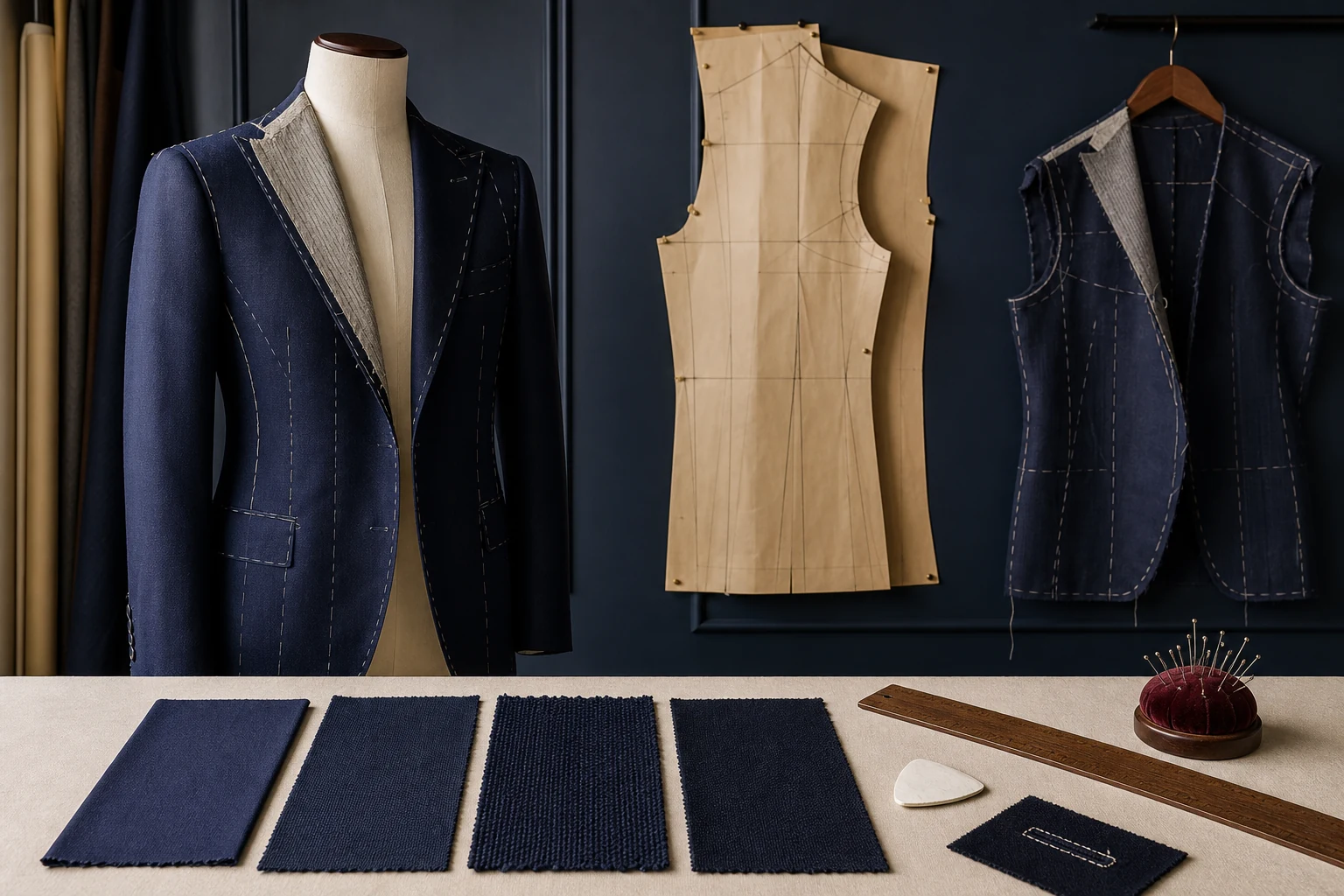
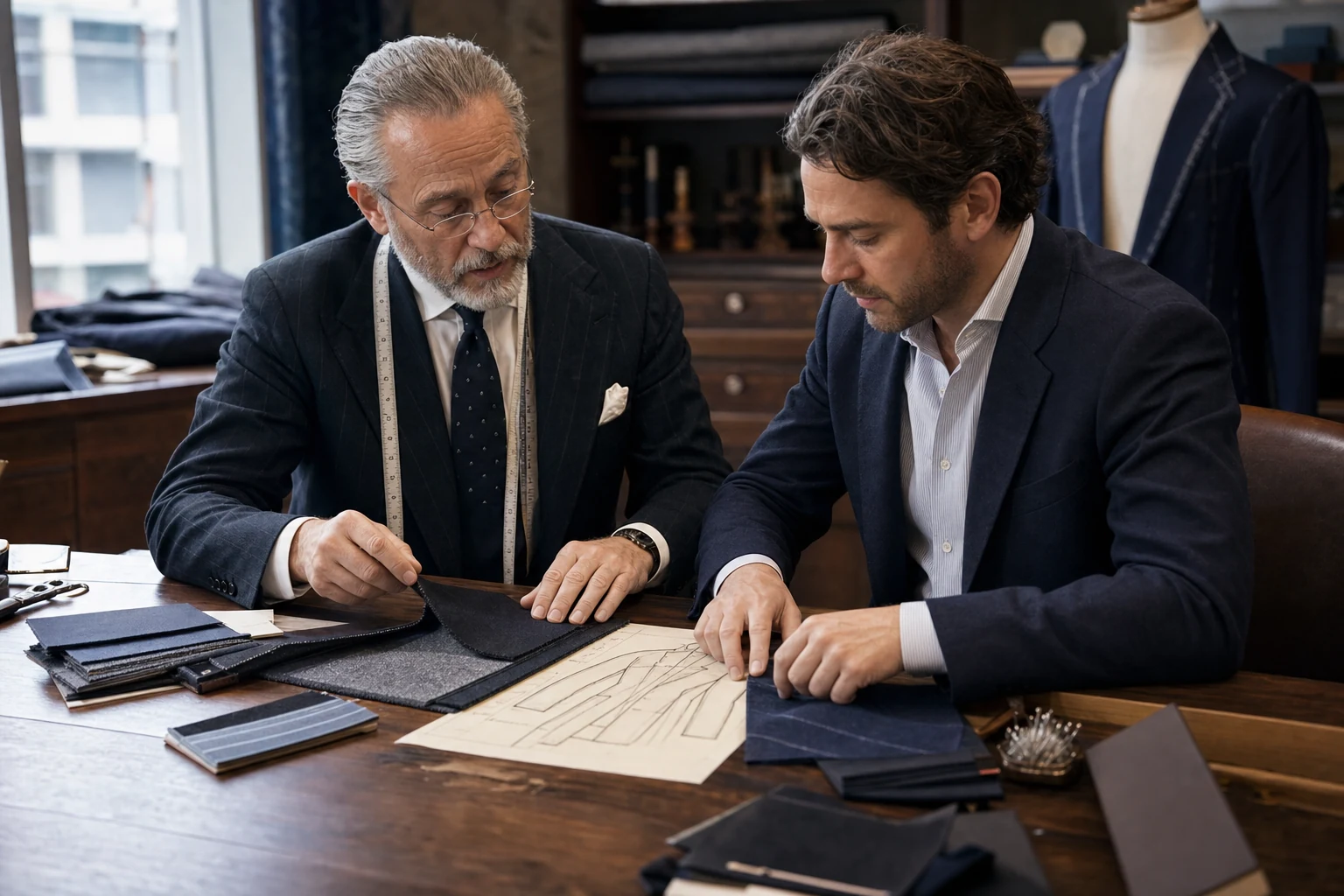
Bespoke is a sequence of observations. Stand naturally, move normally and let each fitting solve the next layer.
Compare the visible differences in measurements, fittings and common fit problems: proportion, material, finish and behaviour in use.
Bespoke is a sequence of observations. Stand naturally, move normally and let each fitting solve the next layer.
“Could you show me how the choices in measurements, fittings and common fit problems change the result for my use, climate and preferred formality?”
Measurements
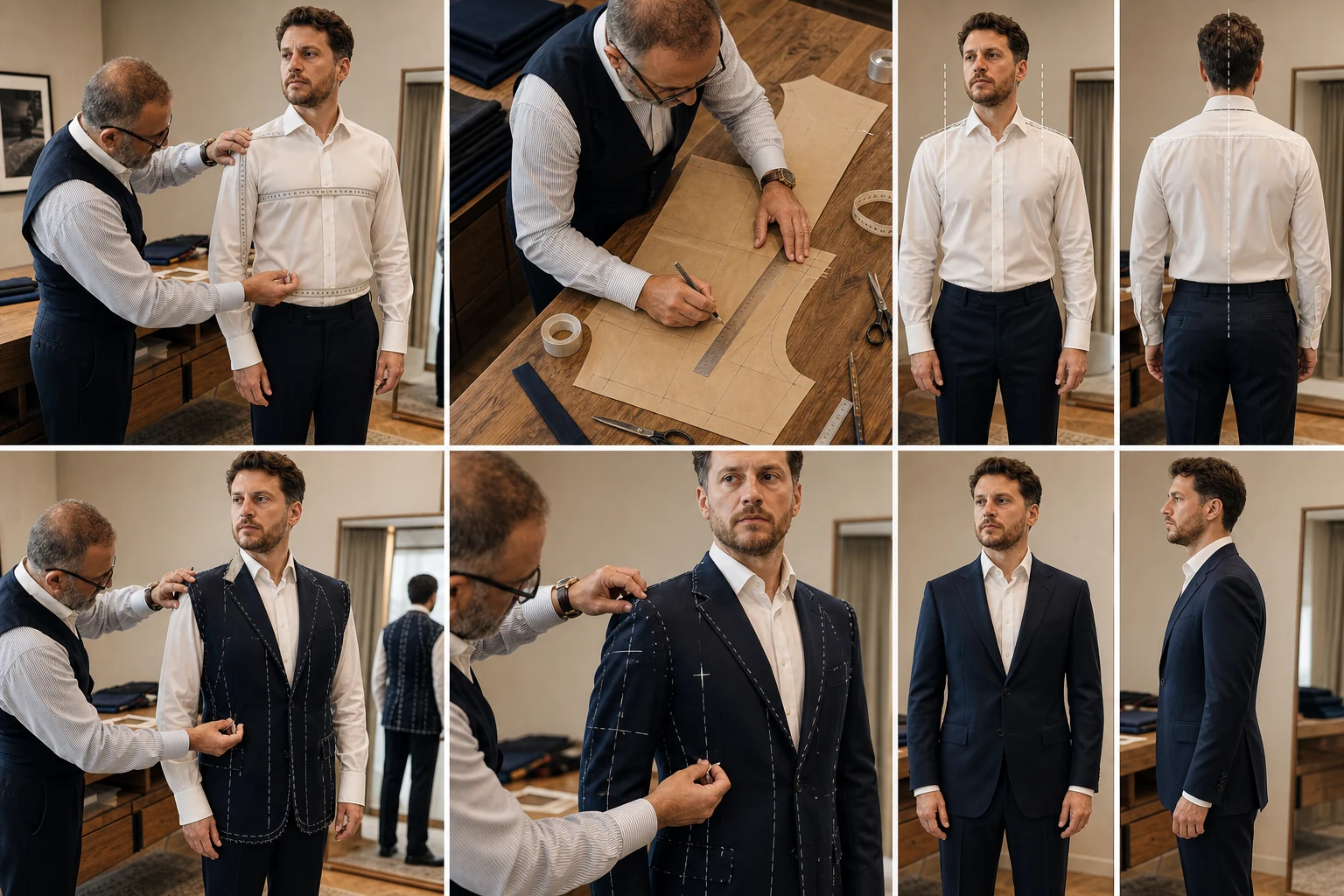
A maker records the body, posture and asymmetry, then interprets them through a pattern rather than treating numbers as the finished answer.
Fitting stages
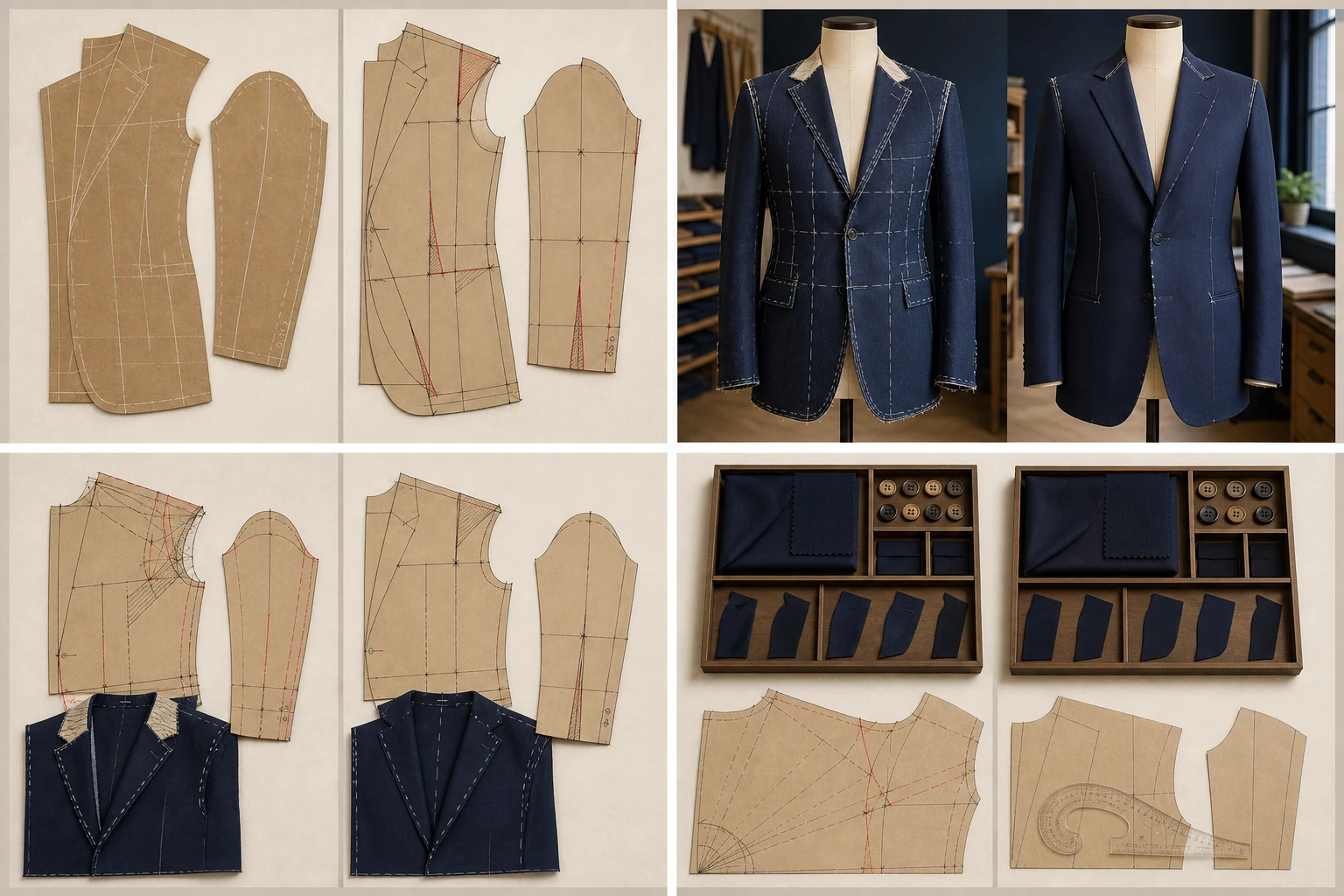
A basted fitting establishes balance and volume; later fittings refine collar, sleeve, waist, trouser line and finishing.
Jacket warnings
Collar gap, shoulder divots, chest bowing, pulling at the button, crossed vents and uneven fronts point to different causes.
Trouser warnings
A tight fork, smiling pockets, diagonal drag lines, seat collapse and excess break should be diagnosed before hems are final.
What to ask—and what to say
Describe use, feel and visual intention. Bring reference images, but ask the maker to interpret them for your body and climate.
Compare the visible differences in what to ask—and what to say: proportion, material, finish and behaviour in use.
Describe use, feel and visual intention. Bring reference images, but ask the maker to interpret them for your body and climate.
“What would you recommend for my use, climate and preferred formality—and why?”
Start with use
State frequency, climate, dress code, travel needs and whether the garment must work as separates.
Ask about trade-offs
How will this cloth recover after sitting? What changes if the shoulder is softened? What can be altered later?
Use precise language
“I prefer a clean collar, moderate lapel width and enough trouser rise to keep the shirt covered when seated.”
Stay open
“That is the effect I am after. How would you achieve it with your house style and my proportions?”