Contents · Sections
Ties and pocket squares
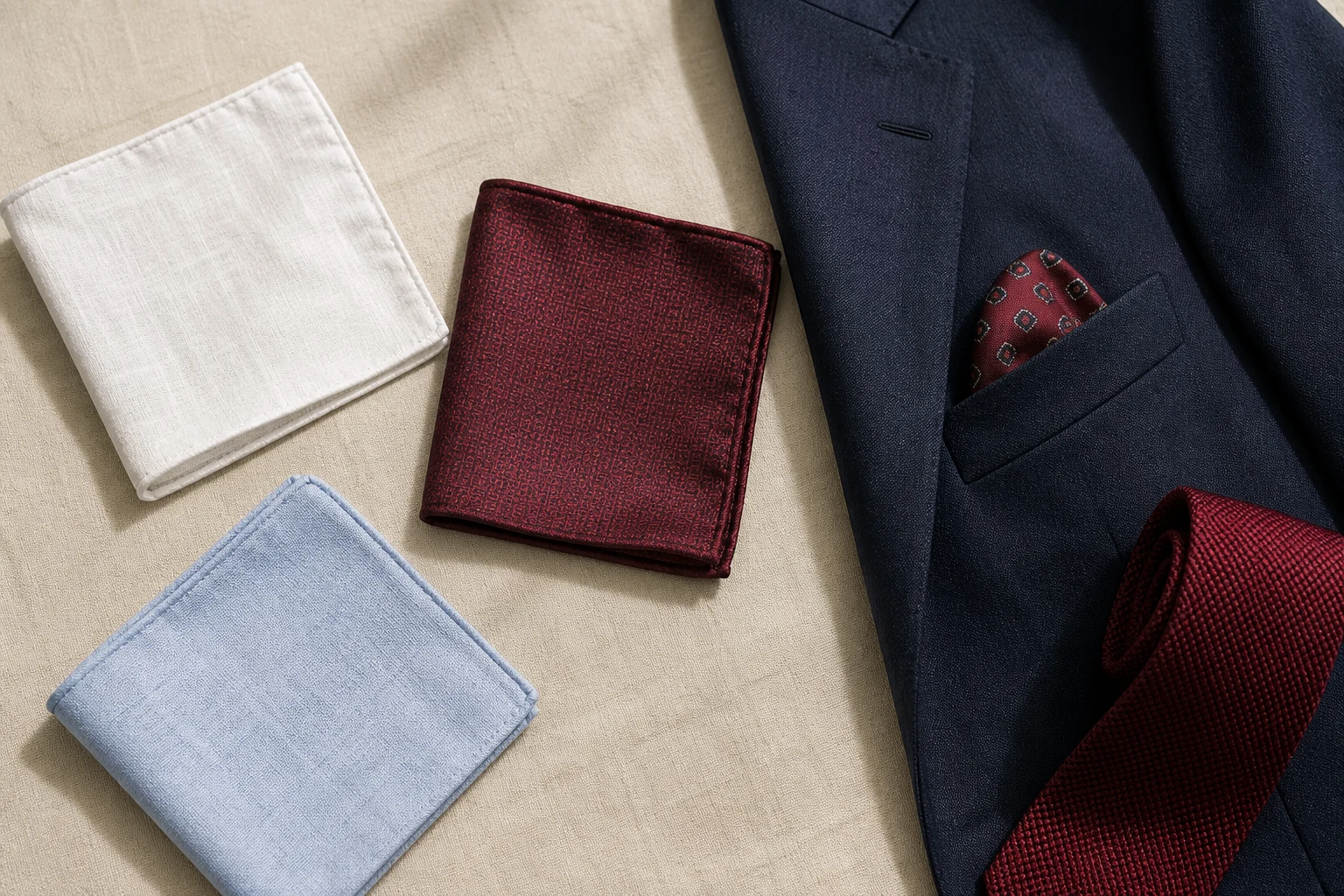
Texture and proportion matter before pattern. The square should relate to the outfit without copying the tie.
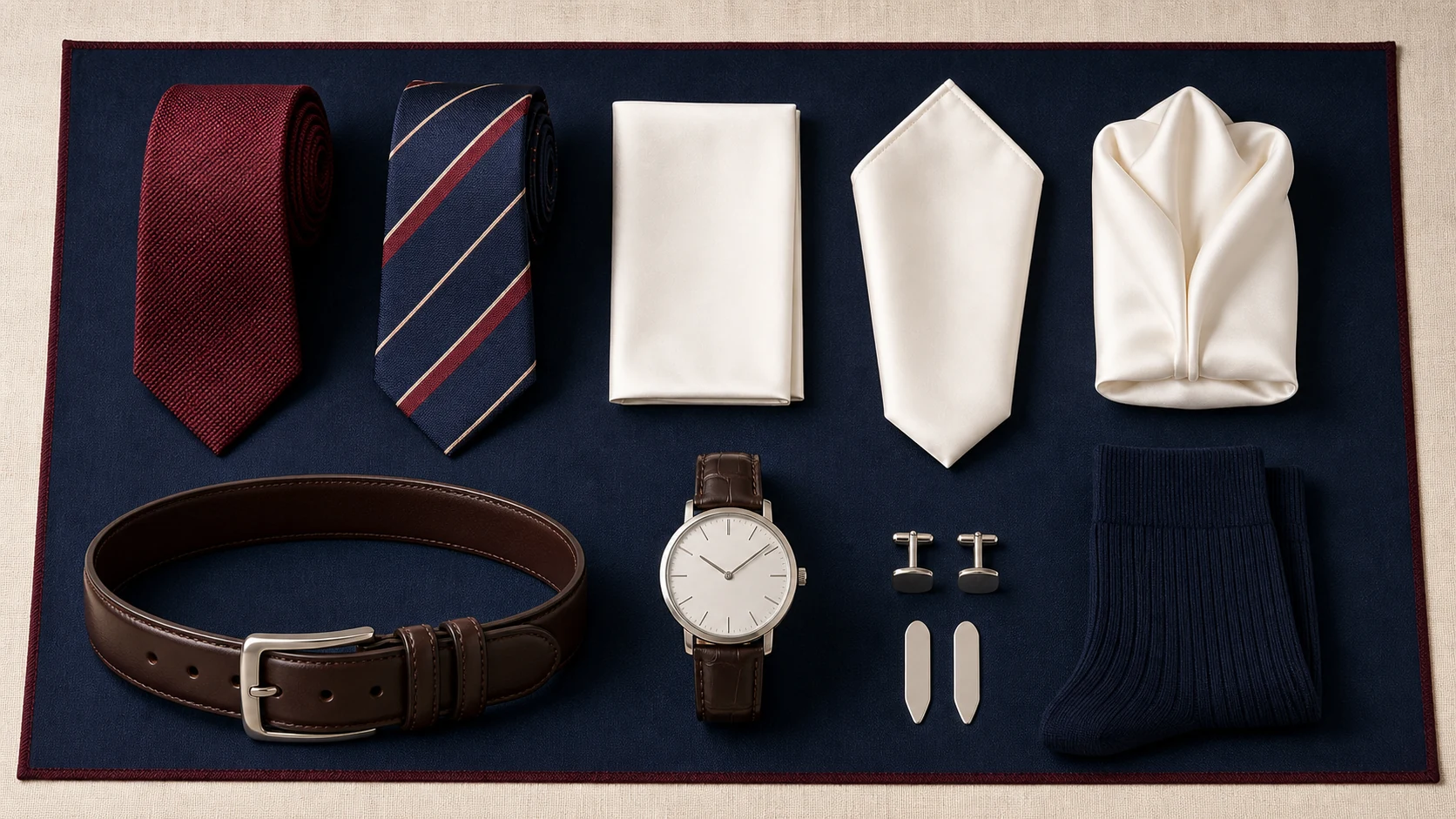
Compare the visible differences in ties and pocket squares: proportion, material, finish and behaviour in use.
Texture and proportion matter before pattern. The square should relate to the outfit without copying the tie.
“Could you show me how the choices in ties and pocket squares change the result for my use, climate and preferred formality?”
Tie width and knot
Relate blade width to lapel width and scale the knot to the collar spread. Four-in-hand is asymmetric and adaptable; half-Windsor is more balanced.
Pocket-square folds
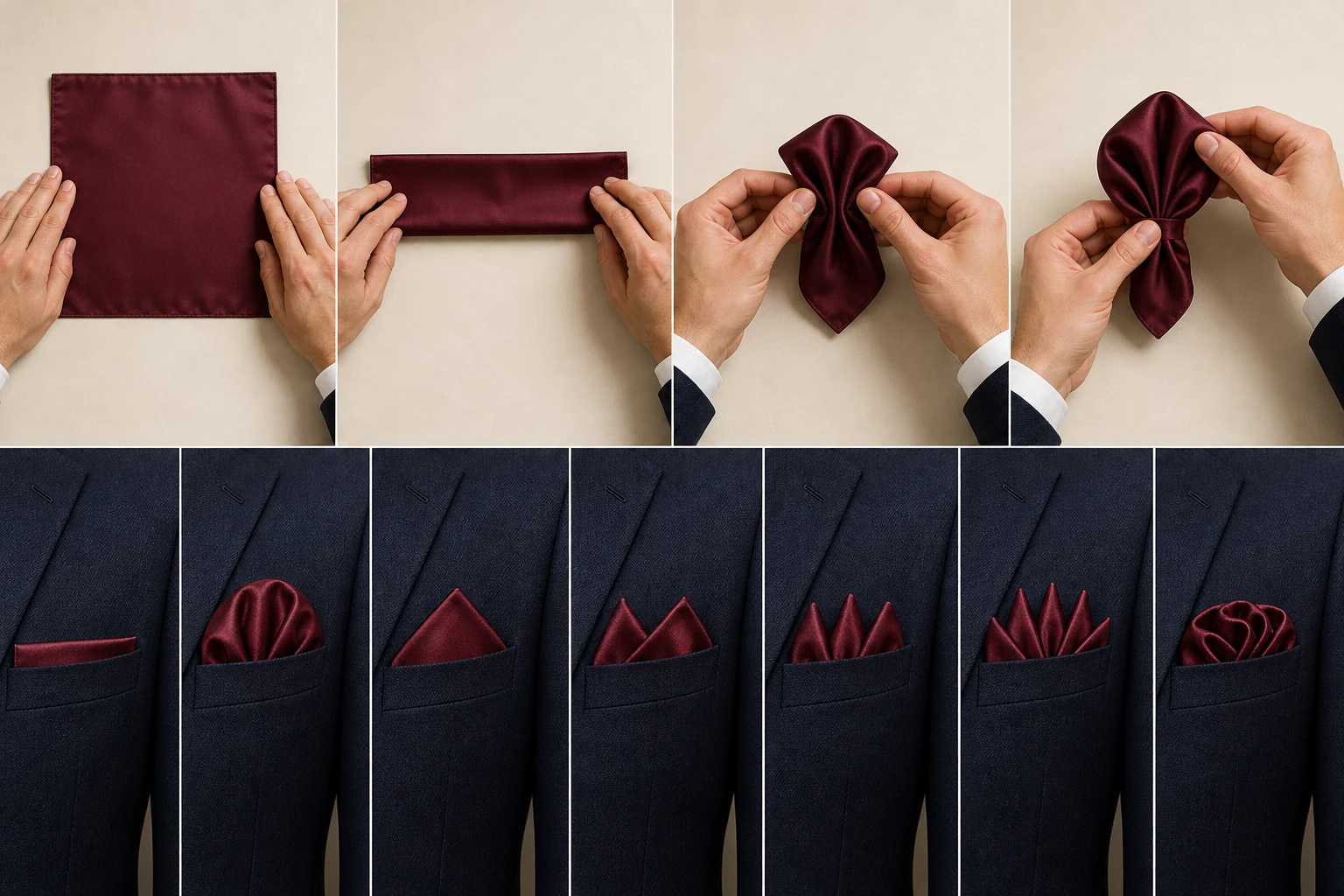
A flat fold is restrained, a one-point or two-point fold is sharper, and a puff or soft roll is relaxed.
Pattern
Repeat a secondary colour or texture rather than reproducing the tie. Leave visual breathing room around a strong jacket pattern.
Placement
Let a modest amount show and keep the fold stable without stuffing the pocket into a bulge.
Belts, braces and socks
These practical pieces control transitions at the waist and ankle.
Compare the visible differences in belts, braces and socks: proportion, material, finish and behaviour in use.
These practical pieces control transitions at the waist and ankle.
“Could you show me how the choices in belts, braces and socks change the result for my use, climate and preferred formality?”
Belts
Match leather family and formality rather than chasing an exact colour. Slim, simple buckles work best with tailored trousers.
Braces
Buttons and proper rise allow braces to hold trousers from the shoulders without a belt. Side adjusters keep the waistband cleaner.
Socks
Match trousers for a longer line, or echo an outfit colour with restraint. Over-the-calf lengths remain covered when seated.
Watches, metals and jewellery
Scale, finish and setting are more persuasive than price or conspicuousness.
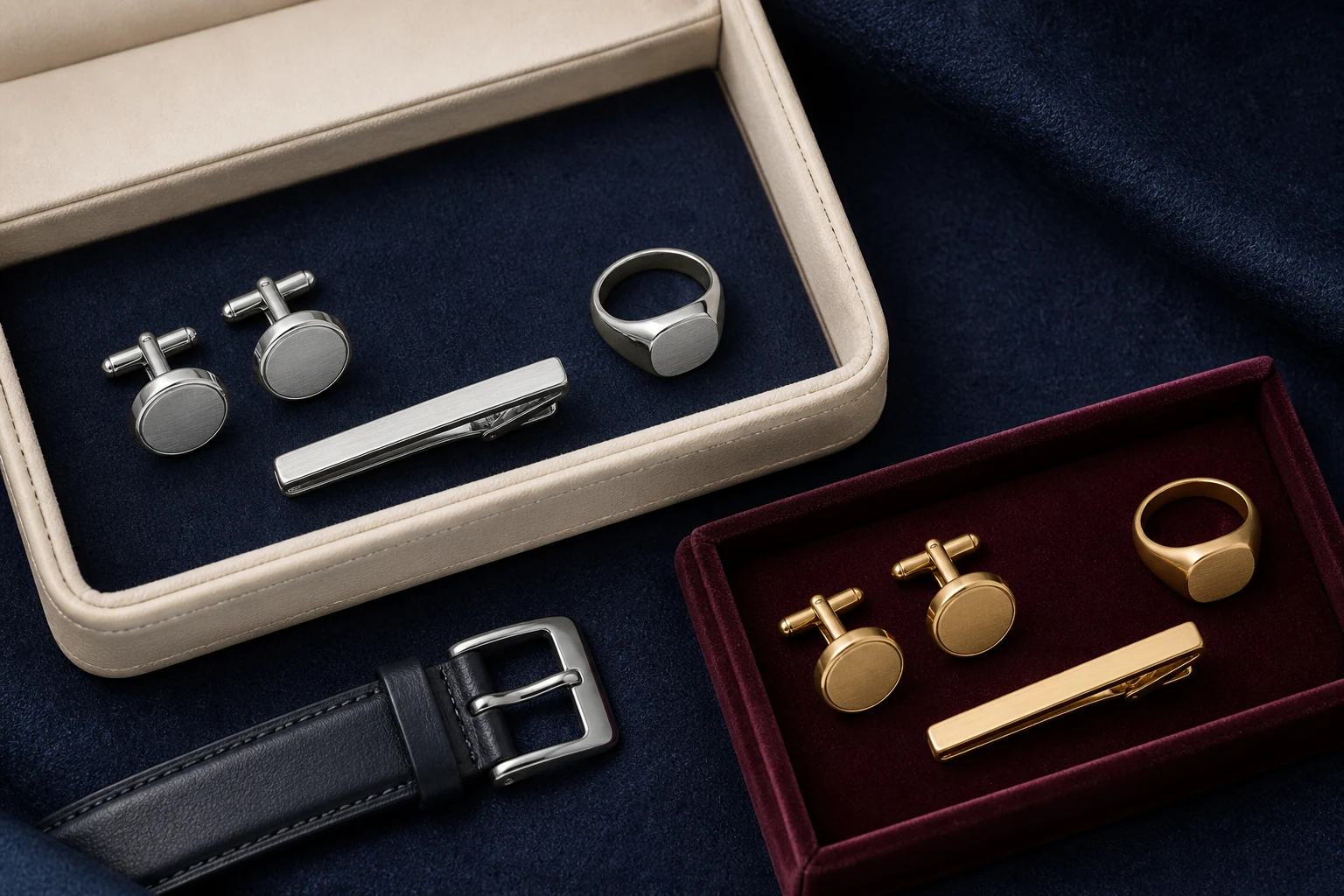
Compare the visible differences in watches, metals and jewellery: proportion, material, finish and behaviour in use.
Scale, finish and setting are more persuasive than price or conspicuousness.
“Could you show me how the choices in watches, metals and jewellery change the result for my use, climate and preferred formality?”
Watch
A slim dress watch slips under a cuff; sportier cases and bracelets suit less formal cloth and settings.
Metals
Keep the dominant metal family coherent across buckle, watch, cufflinks and ring, while accepting subtle mixed-metal pieces.
Jewellery
Wedding bands, signet rings, cufflinks and simple tie bars should leave room for the wearer, not become a display case.
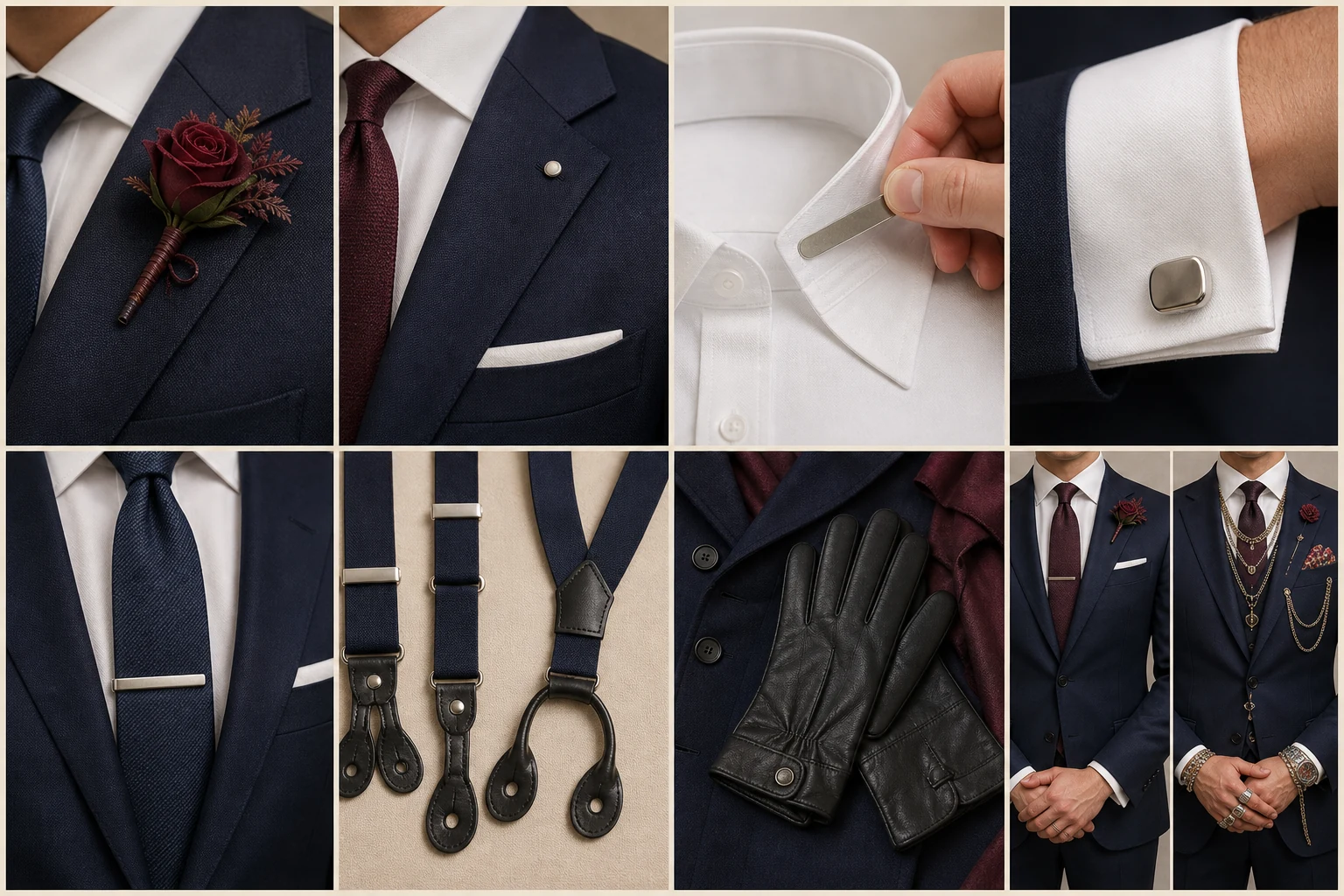
Lapel details and collar stays
The smallest interventions need the strongest restraint.
Compare the visible differences in lapel details and collar stays: proportion, material, finish and behaviour in use.
The smallest interventions need the strongest restraint.
“Could you show me how the choices in lapel details and collar stays change the result for my use, climate and preferred formality?”
Boutonnière
Use the working lapel buttonhole for a small fresh flower on an appropriate occasion; avoid pinning through fine cloth unnecessarily.
Lapel pins
Choose one small, relevant piece and check that its backing does not damage the lapel.
Collar stays
Use the correct length so the collar point is supported without distortion. Remove metal stays before washing or pressing.