Contents · Sections
The care rhythm
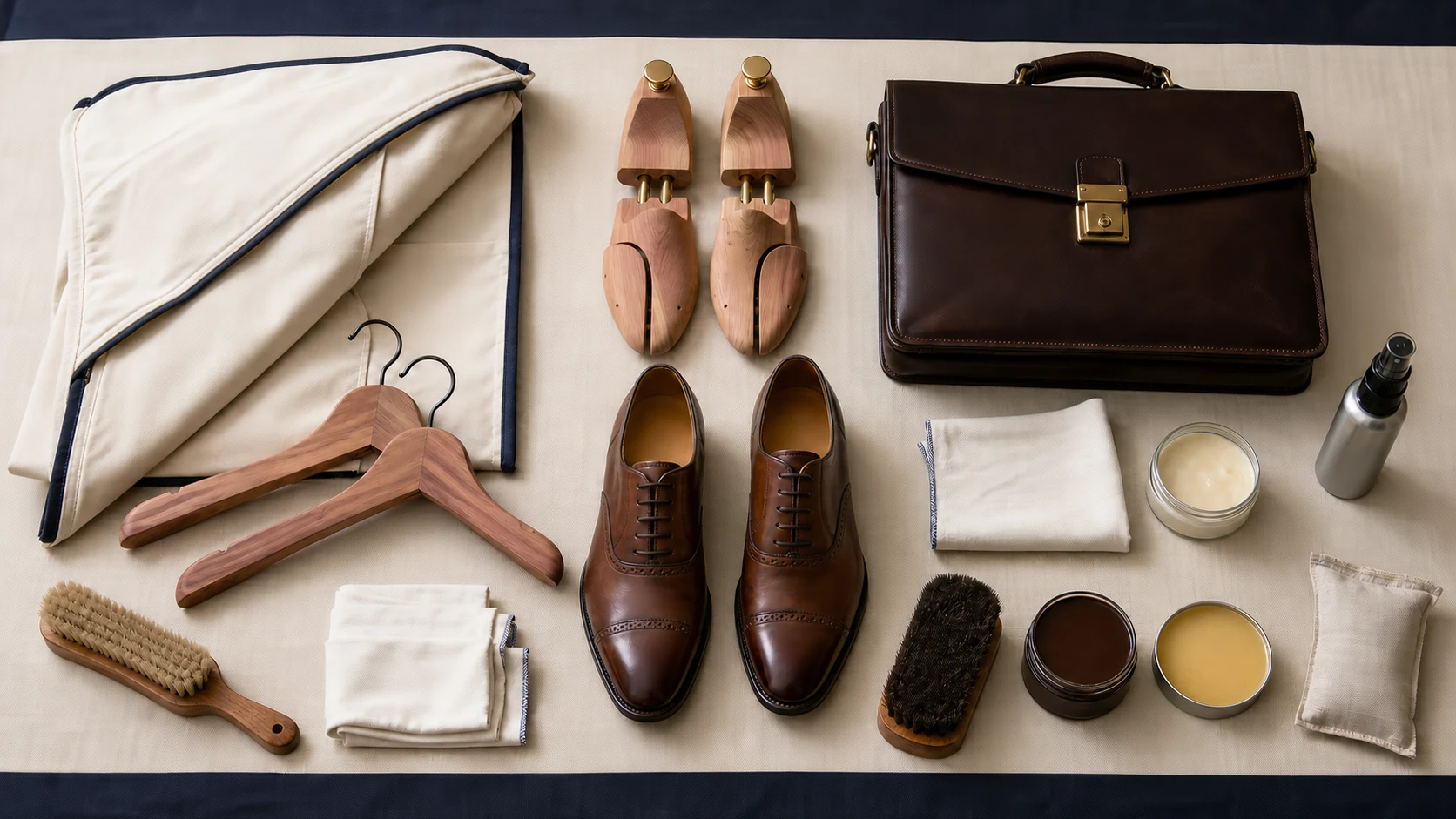
Clean, protect, preserve and inspect. Most damage begins when one step is skipped repeatedly.
Compare the visible differences in the care rhythm: proportion, material, finish and behaviour in use.
Clean, protect, preserve and inspect. Most damage begins when one step is skipped repeatedly.
“Could you show me how the choices in the care rhythm change the result for my use, climate and preferred formality?”
After wear
Brush cloth, empty pockets, air garments away from direct sun and insert shoe trees once surface moisture has begun to dissipate.
Rest
Rotate suits and shoes so moisture escapes and fibres recover. A second day of hard wear compounds creasing and odour.
Inspect
Catch loose buttons, worn heel lifts, sole thinning, edge damage, mould and stains while intervention is small.
Conditioner, cream and wax are not the same
Layer products by need. More is not more.
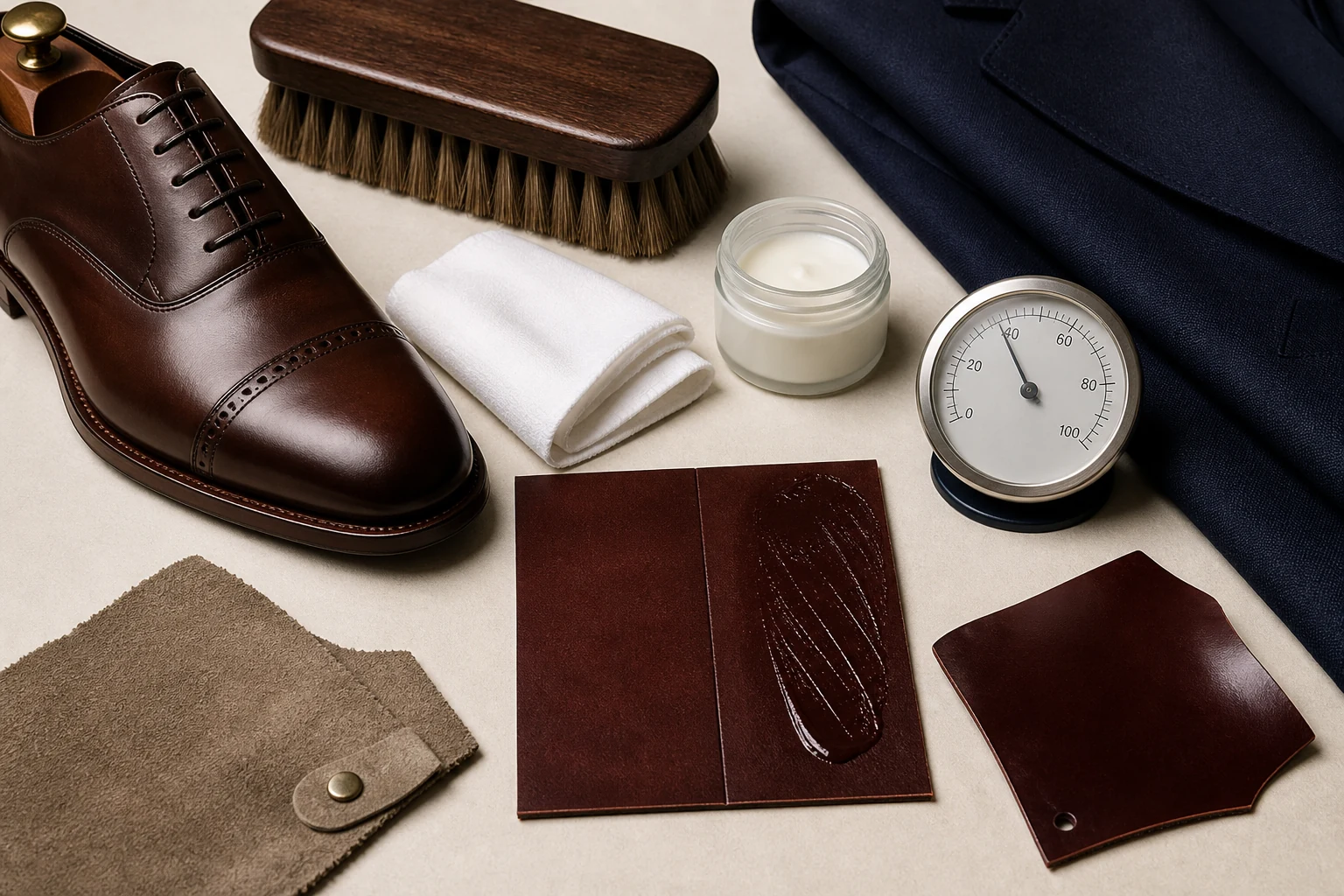
Compare the visible differences in conditioner, cream and wax are not the same: proportion, material, finish and behaviour in use.
Layer products by need. More is not more.
“Could you show me how the choices in conditioner, cream and wax are not the same change the result for my use, climate and preferred formality?”
Conditioner
Replenishes lubricants and can darken some leather. Use sparingly after cleaning or when the surface feels dry.
Shoe cream
Adds pigment, nourishment and a modest sheen. It is the regular colour-maintenance layer for smooth calf.
Wax polish
Builds protection and shine, especially on toe and heel. Heavy wax over flex points can crack and flake.
Expert differences
Some makers condition first; others rely on nourishing cream for routine care. Follow the leather and product system, patch-test, and avoid unnecessary layers.
Mirror shine—a patient sequence
Build many thin wax layers on rigid areas. Stop before heat, pressure or product causes damage.
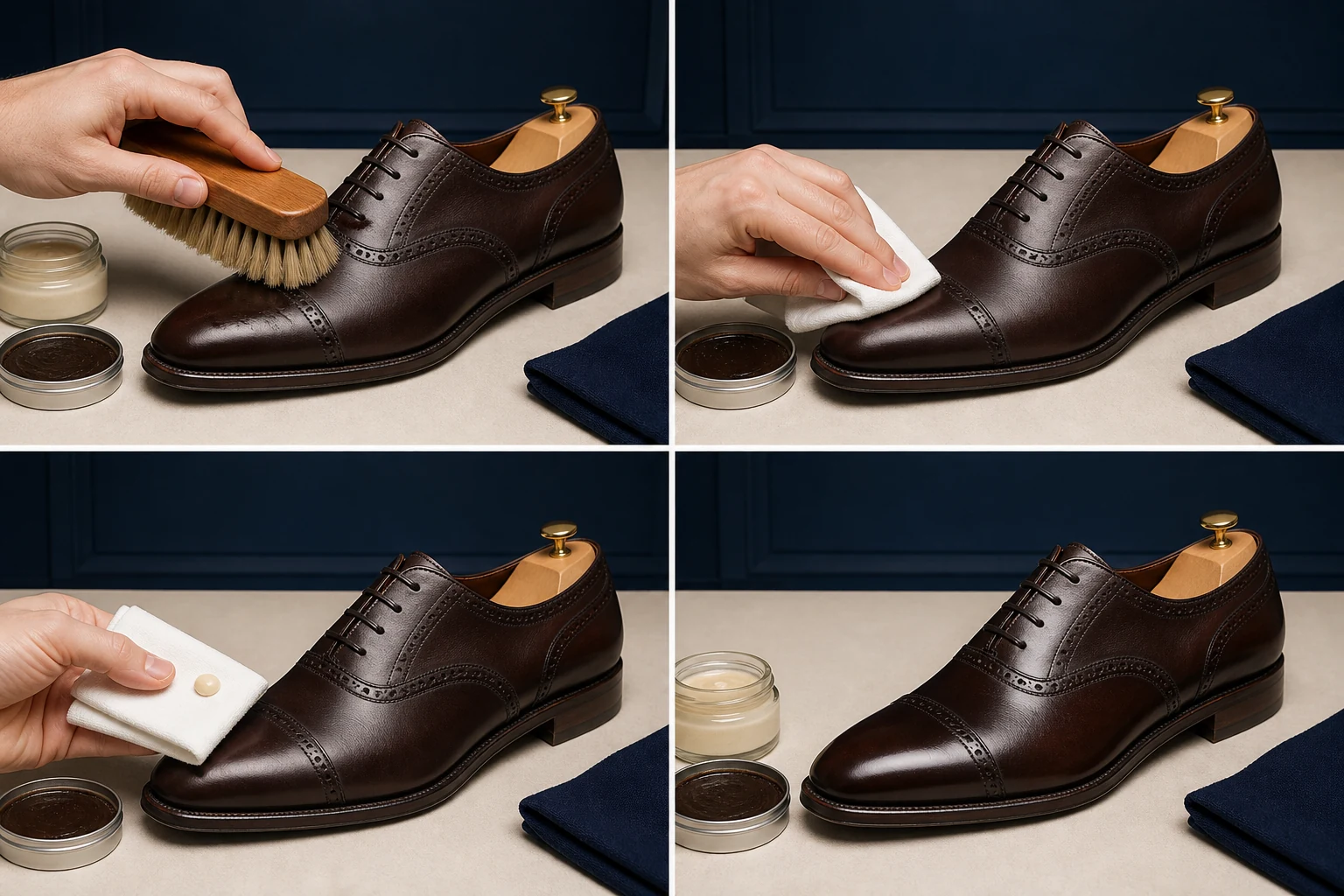
Compare the visible differences in mirror shine—a patient sequence: proportion, material, finish and behaviour in use.
Build many thin wax layers on rigid areas. Stop before heat, pressure or product causes damage.
“Could you show me how the choices in mirror shine—a patient sequence change the result for my use, climate and preferred formality?”
1 · Clean
Brush away grit and wipe with a barely damp cloth. Let the shoe dry completely.
2 · Condition and cream
Apply a thin coat, allow it to absorb, then brush vigorously with a clean horsehair brush.
3 · Wax
Use tiny circles and minimal wax on toe and heel, allowing each film to haze before the next.
4 · Water and buff
Alternate minute drops of water with whisper-thin wax, using a soft cotton cloth with no abrasive seams.
Waterproofing, stains and drying
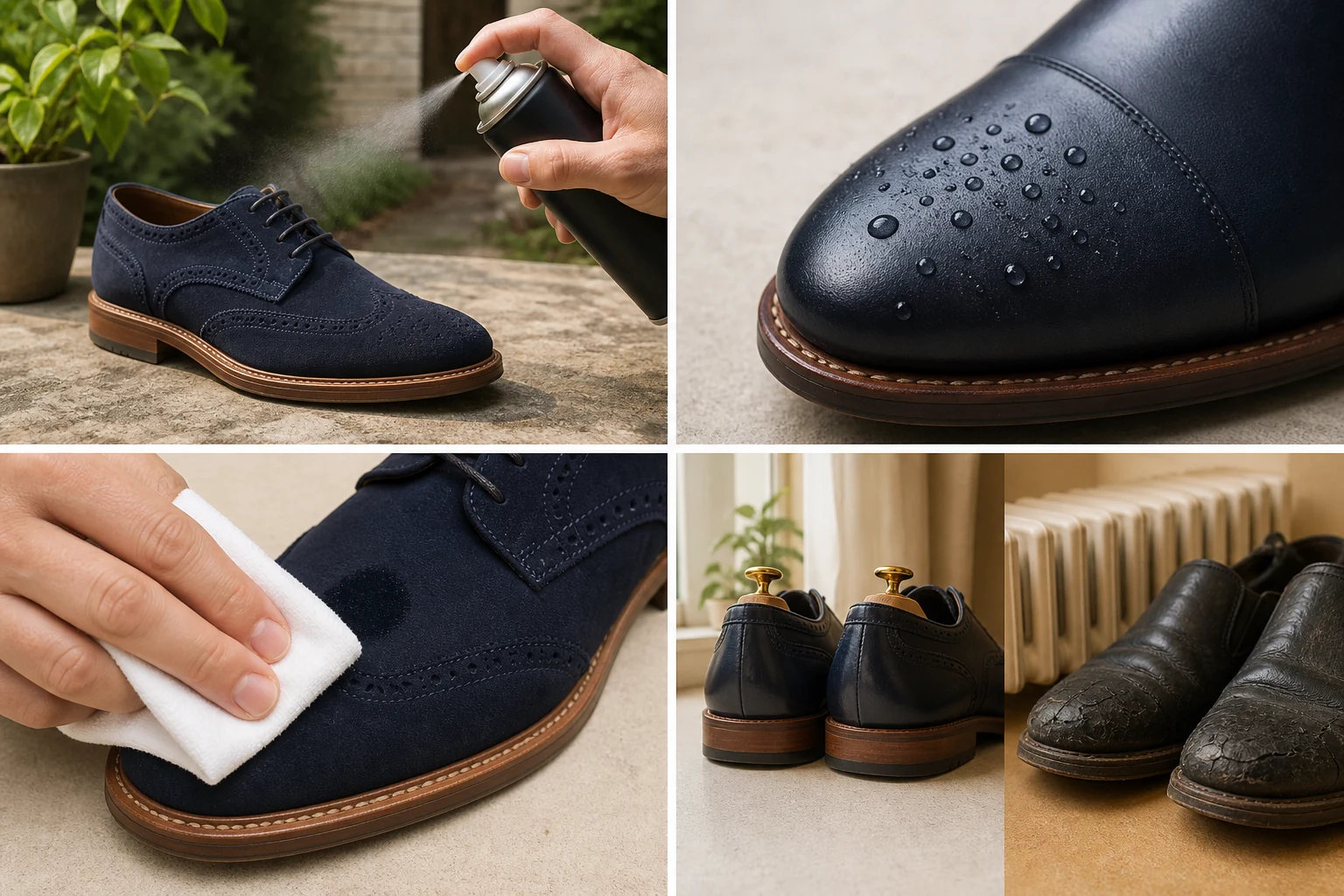
Test first, blot rather than rub, and resist forced heat.
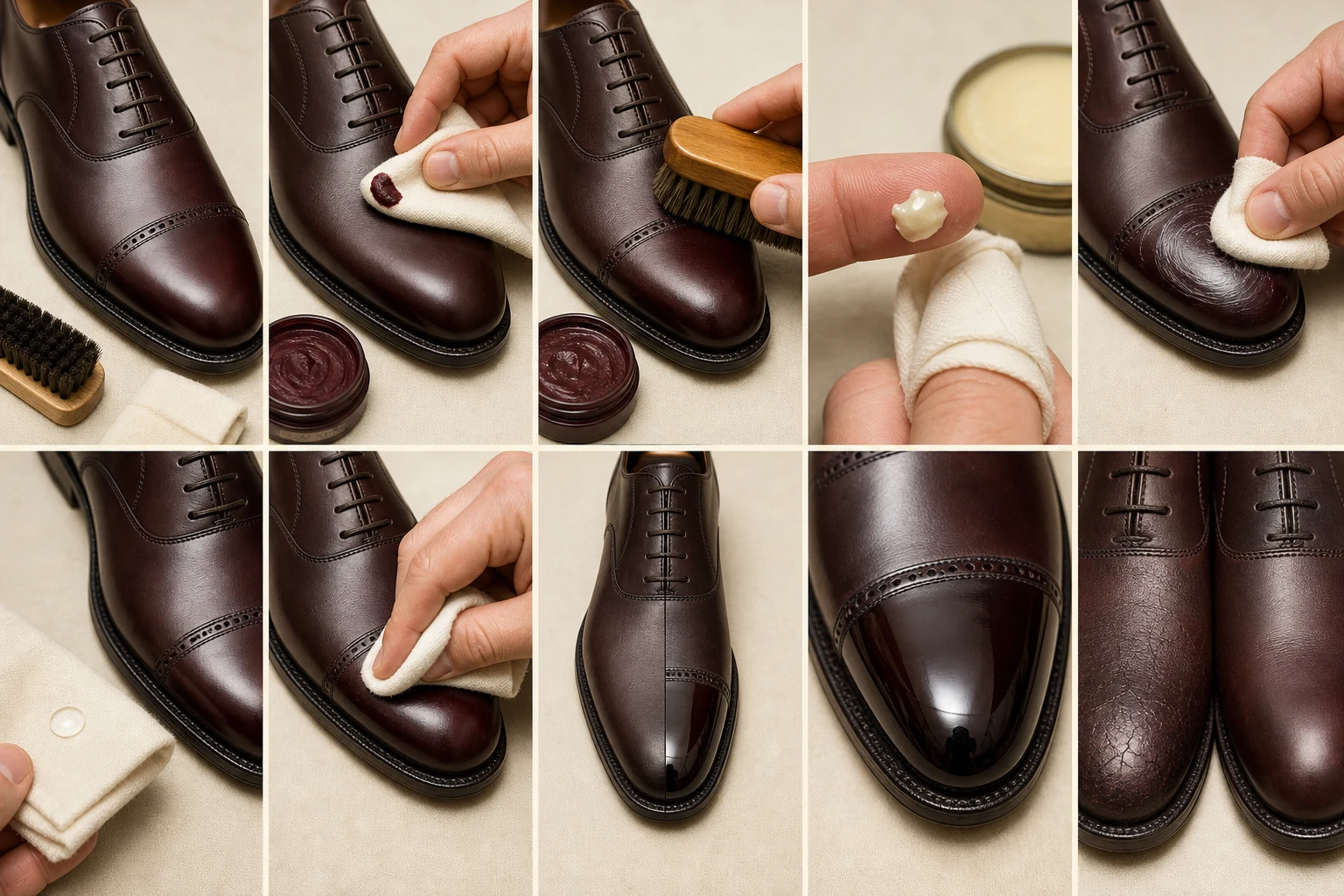
Compare the visible differences in waterproofing, stains and drying: proportion, material, finish and behaviour in use.
Test first, blot rather than rub, and resist forced heat.
“Could you show me how the choices in waterproofing, stains and drying change the result for my use, climate and preferred formality?”
Water protection
Use a product approved for the material. Sprays can change suede colour; wax can alter breathability and finish.
Wet leather
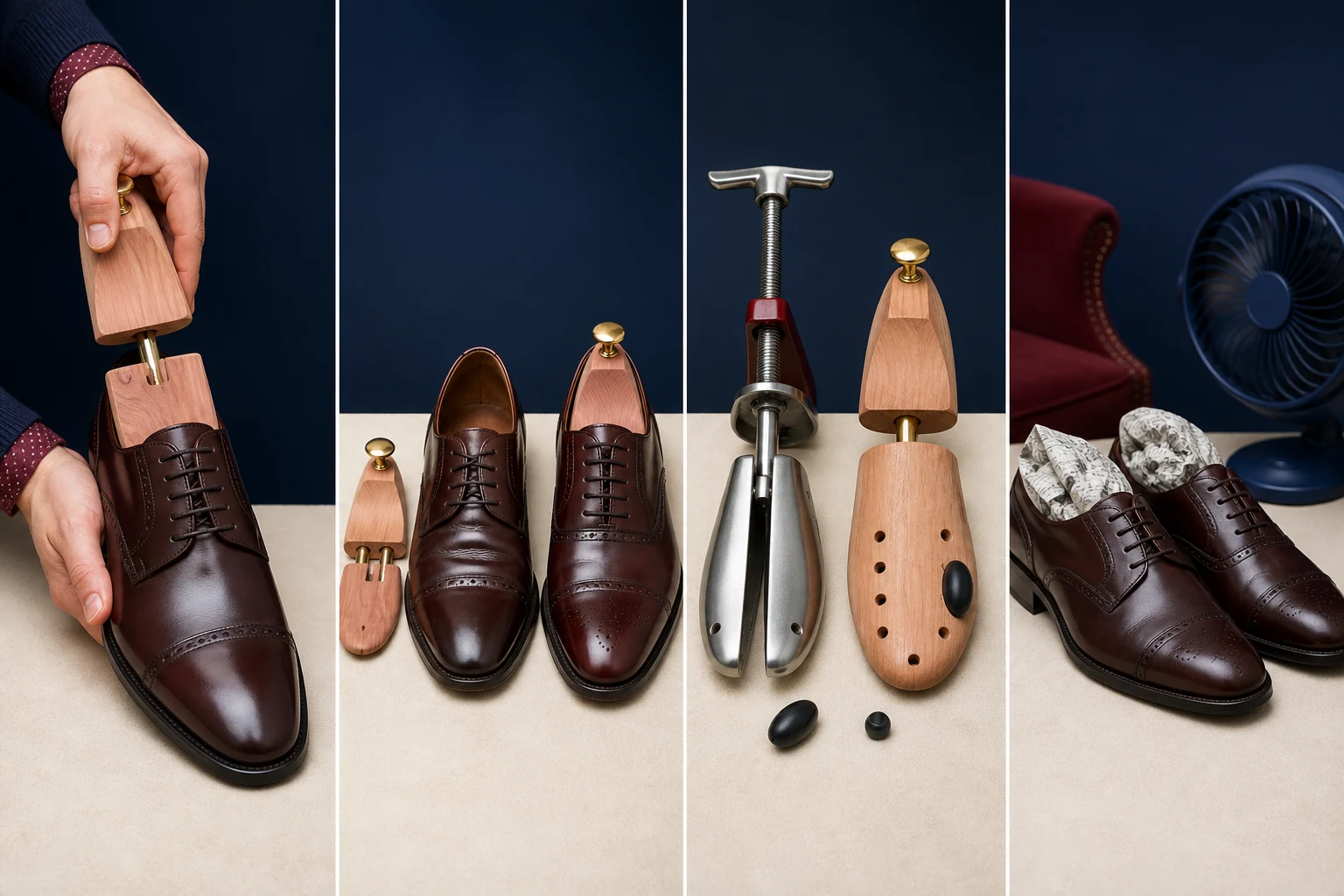
Remove excess water, support shape, stuff lightly with plain paper if soaked, and dry at room temperature away from radiators and sun.
Stains
Identify material and stain before treatment. Blot liquids, lift solids and seek a specialist for ink, oil, blood or valuable delicate skins.
Drying time
A saturated shoe may need 24–48 hours or longer. Surface dryness does not mean the inner structure is ready.
Soles, heels and edges
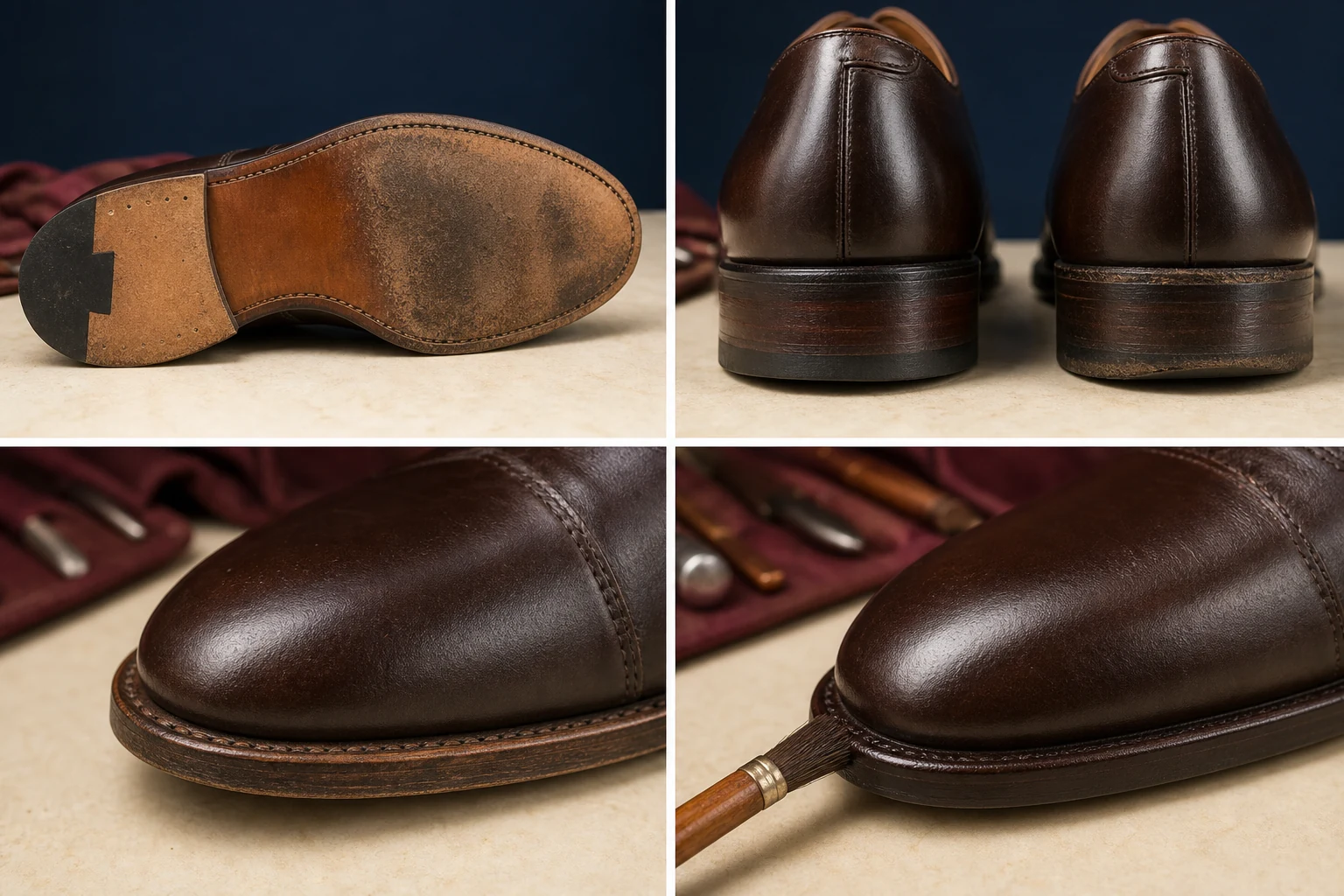
Repair wear before it reaches structural layers.
Compare the visible differences in soles, heels and edges: proportion, material, finish and behaviour in use.
Repair wear before it reaches structural layers.
“Could you show me how the choices in soles, heels and edges change the result for my use, climate and preferred formality?”
Leather soles
Allow them to dry, brush off grit and avoid routine oils that can soften fibres excessively. Ask the maker before adding sole guards.
Heel lifts
Replace worn top lifts before the heel stack is ground unevenly.
Edge dressing
Clean the edge, apply a matching dressing sparingly and keep pigment away from the upper and welt threads.
Stretchers
Use only for small, targeted relief. They cannot safely transform a fundamentally wrong size or last.
Hangers, covers and storage
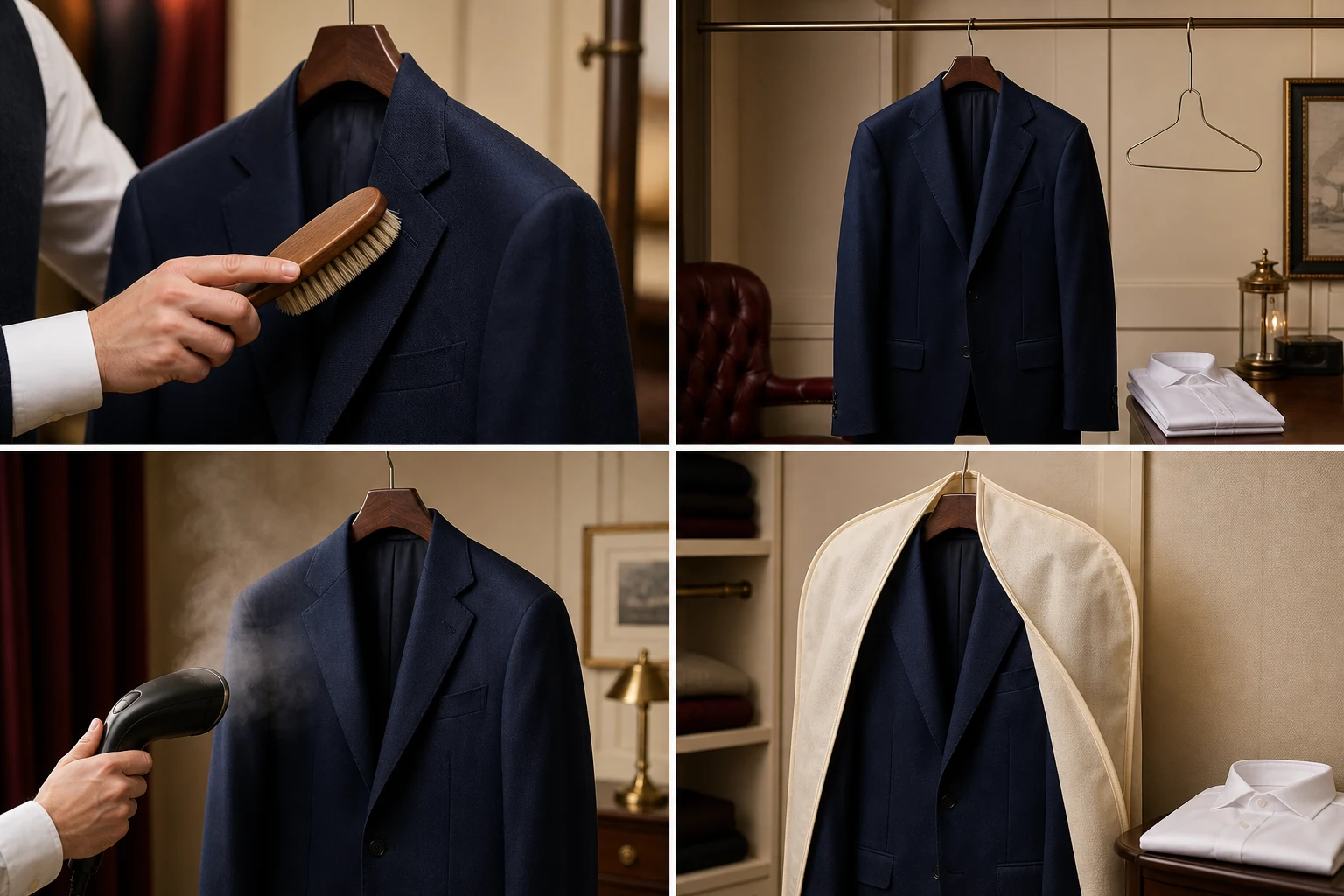
Support shape, allow airflow and keep dust away without trapping moisture.
Compare the visible differences in hangers, covers and storage: proportion, material, finish and behaviour in use.
Support shape, allow airflow and keep dust away without trapping moisture.
“Could you show me how the choices in hangers, covers and storage change the result for my use, climate and preferred formality?”
Hangers
Use a broad, contoured jacket hanger and a secure trouser bar or clamp. Avoid thin wire that concentrates pressure.
Garment covers
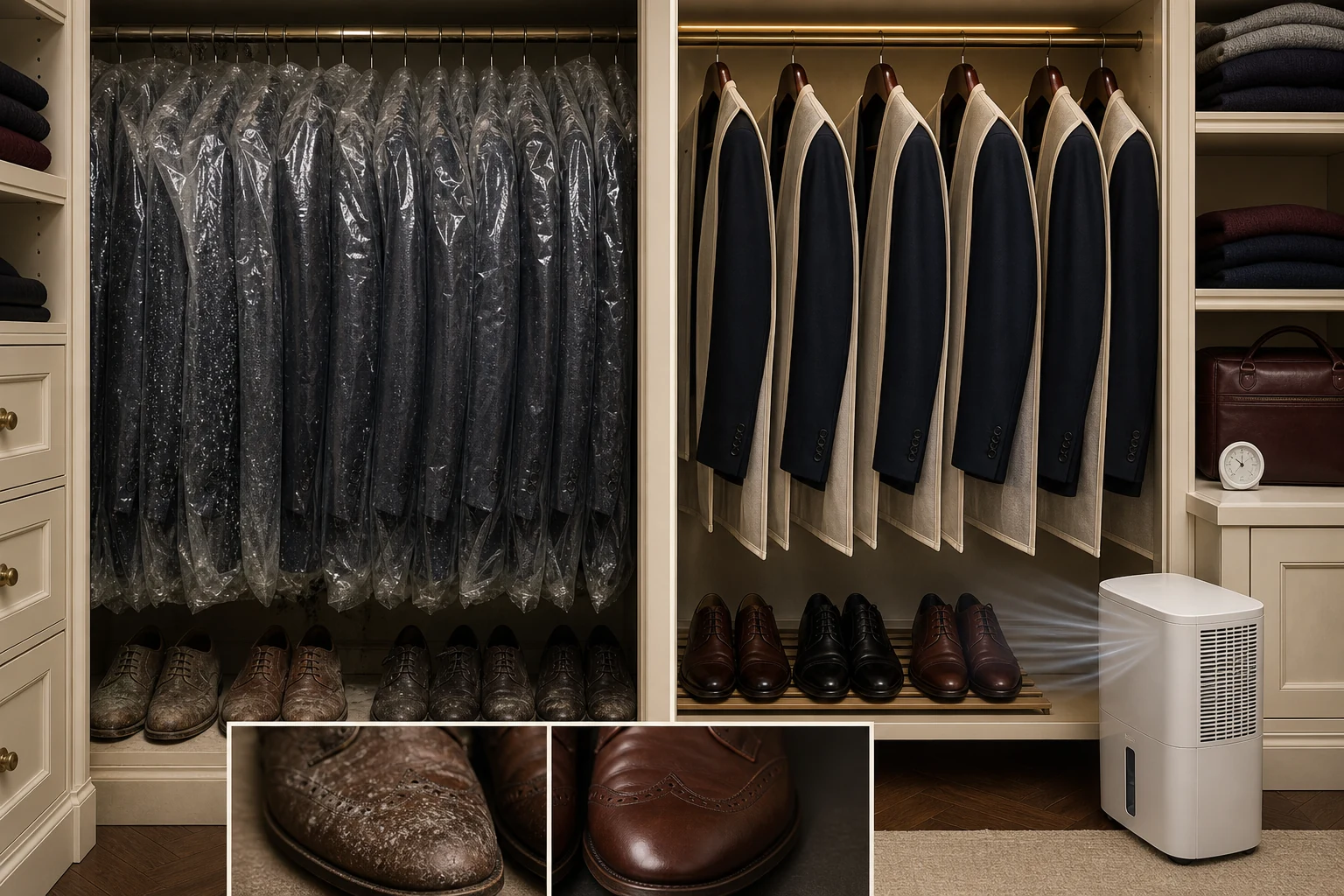
Breathable cotton or non-woven covers suit long storage; avoid sealed plastic around damp or natural-fibre garments.
Shoe trees
Smooth unfinished cedar absorbs some moisture; lacquered or plastic trees preserve shape with less moisture exchange.
Leather goods
Empty heavy contents, support softly with acid-free tissue, release strap tension and store in a breathable dust bag.
Humidity and dehumidifying
Humid climates require airflow, monitoring and modest environmental control—not sealed boxes full of wet items.
Compare the visible differences in humidity and dehumidifying: proportion, material, finish and behaviour in use.
Humid climates require airflow, monitoring and modest environmental control—not sealed boxes full of wet items.
“Could you show me how the choices in humidity and dehumidifying change the result for my use, climate and preferred formality?”
Symptoms
Musty odour, cold clammy cloth, speckled mould, swollen leather and green corrosion around hardware are warnings.
Control
Use ventilation and a room dehumidifier where practical. Keep desiccants contained, monitored and away from direct contact with leather.
Mould
Isolate affected items, work safely in a ventilated place and consult a specialist for valuable pieces or recurrent growth.
Material-specific cautions
When uncertain, do less, test invisibly and ask the maker.
Compare the visible differences in material-specific cautions: proportion, material, finish and behaviour in use.
When uncertain, do less, test invisibly and ask the maker.
“Could you show me how the choices in material-specific cautions change the result for my use, climate and preferred formality?”
Suede and nubuck
Use dedicated brushes and approved sprays; avoid smooth-leather cream and heavy oils.
Patent leather
Wipe gently and prevent surfaces touching during storage; some conditioners can cloud the coating.
Shell cordovan
Brush, smooth rolls and use very little compatible cream. Too much product creates a dull, sticky bloom.
Crocodilian and delicate skins
Keep away from soaking, harsh solvents and generic treatments; follow the tannery or maker’s specialist advice.