Contents · Sections
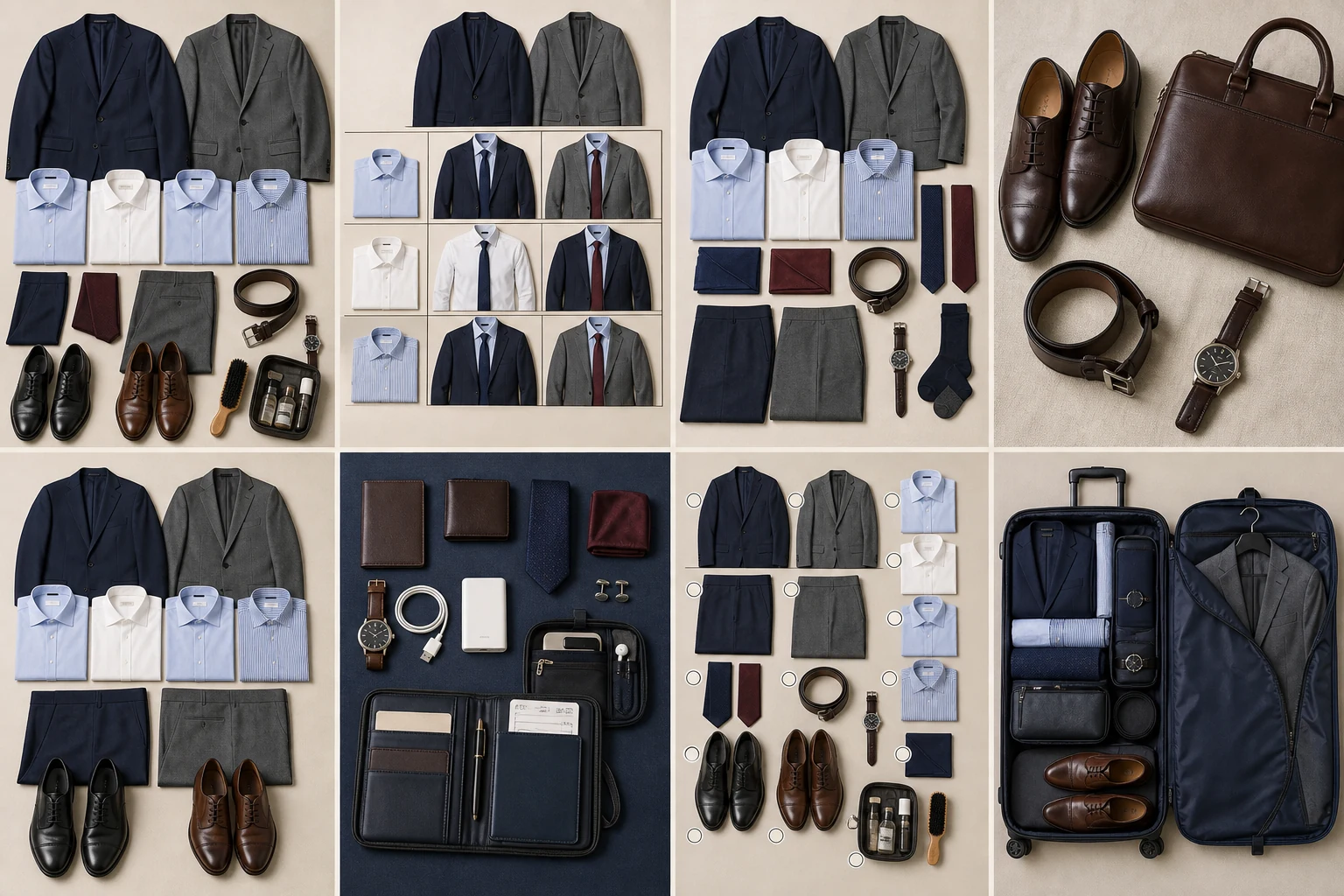
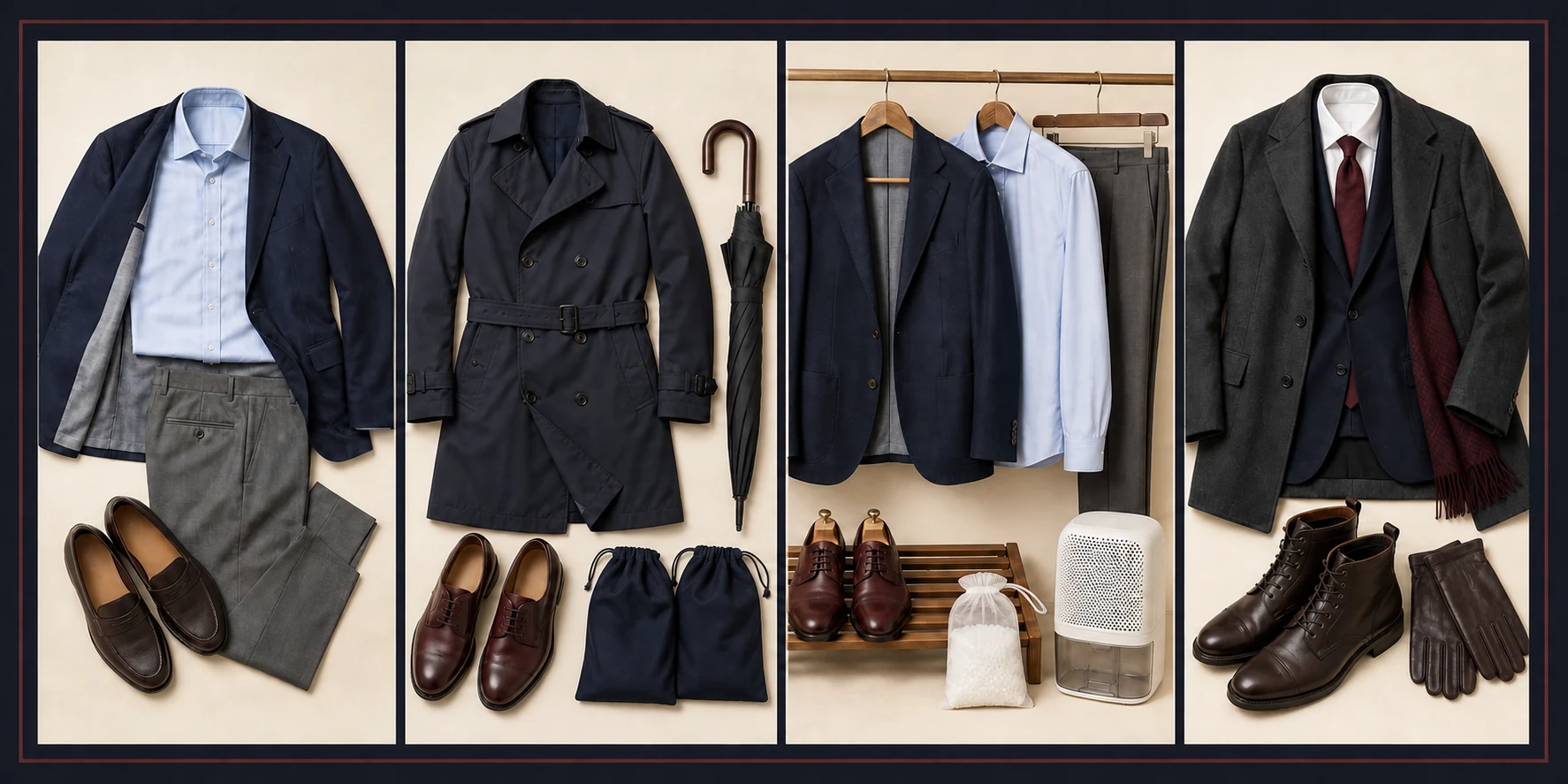
Plan outfits before packing items
One coherent palette turns a short list into several credible combinations.
Compare the visible differences in plan outfits before packing items: proportion, material, finish and behaviour in use.
One coherent palette turns a short list into several credible combinations.
“Could you show me how the choices in plan outfits before packing items change the result for my use, climate and preferred formality?”
Agenda
List meetings, dinners, formal events, travel days and any written dress codes.
Palette
Choose one primary suit colour, two or three shirts, two ties and one main leather colour that recombine cleanly.
Climate
Check heat, humidity, rain and indoor cooling. Add an open-weave option, light layer or weather protection as needed.
Contingency
Carry one clean shirt, essential medicine, documents and critical accessories in hand luggage.
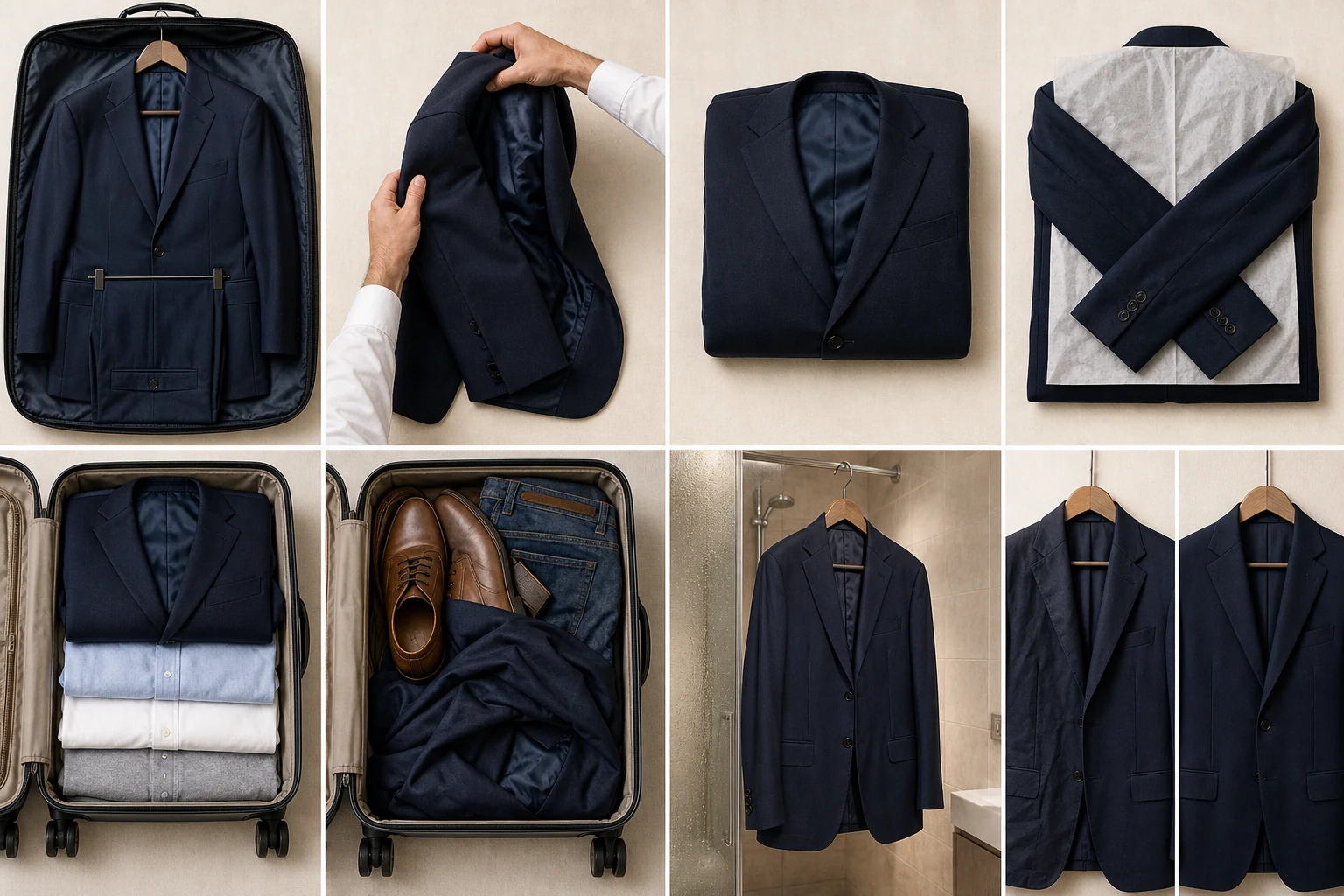
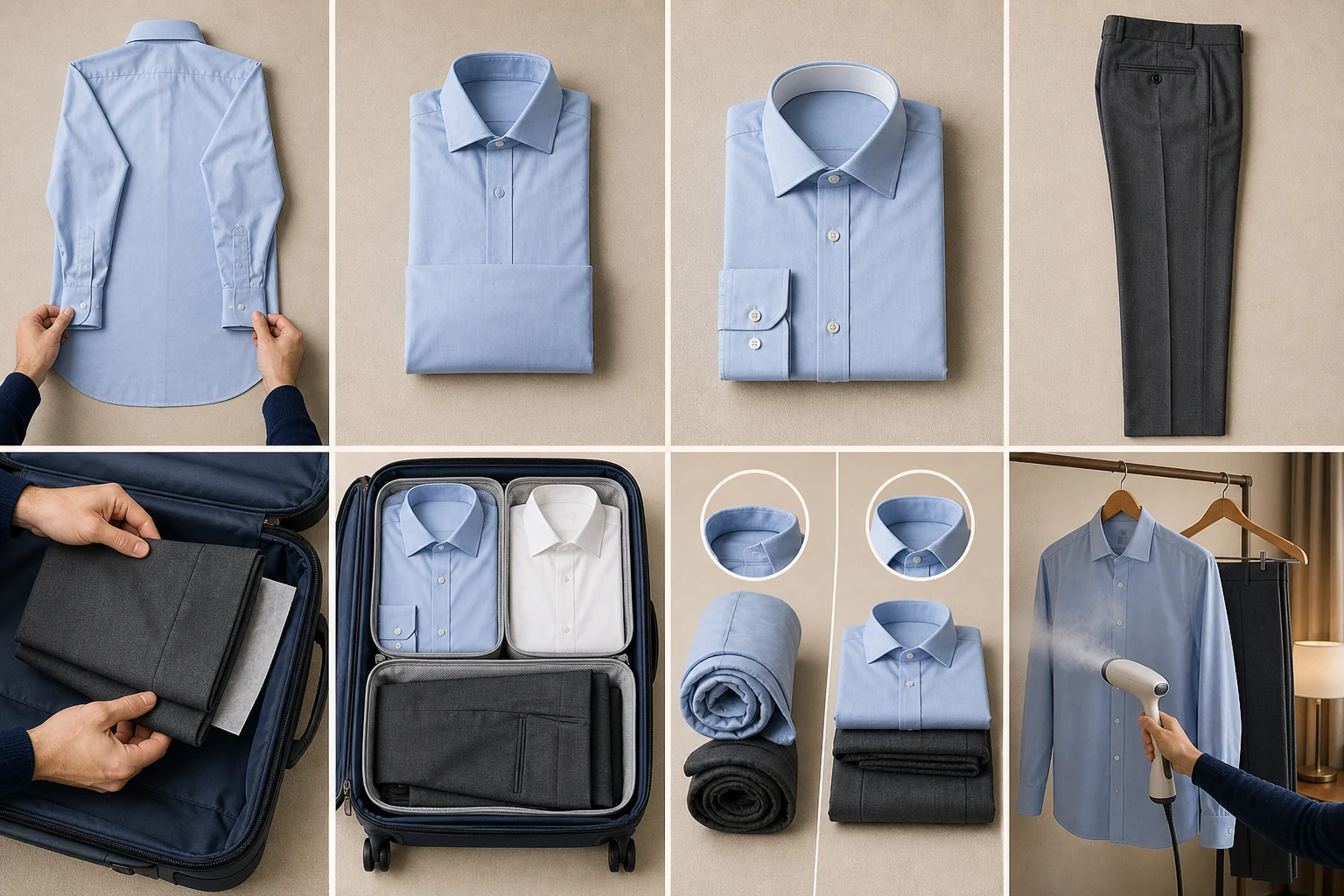
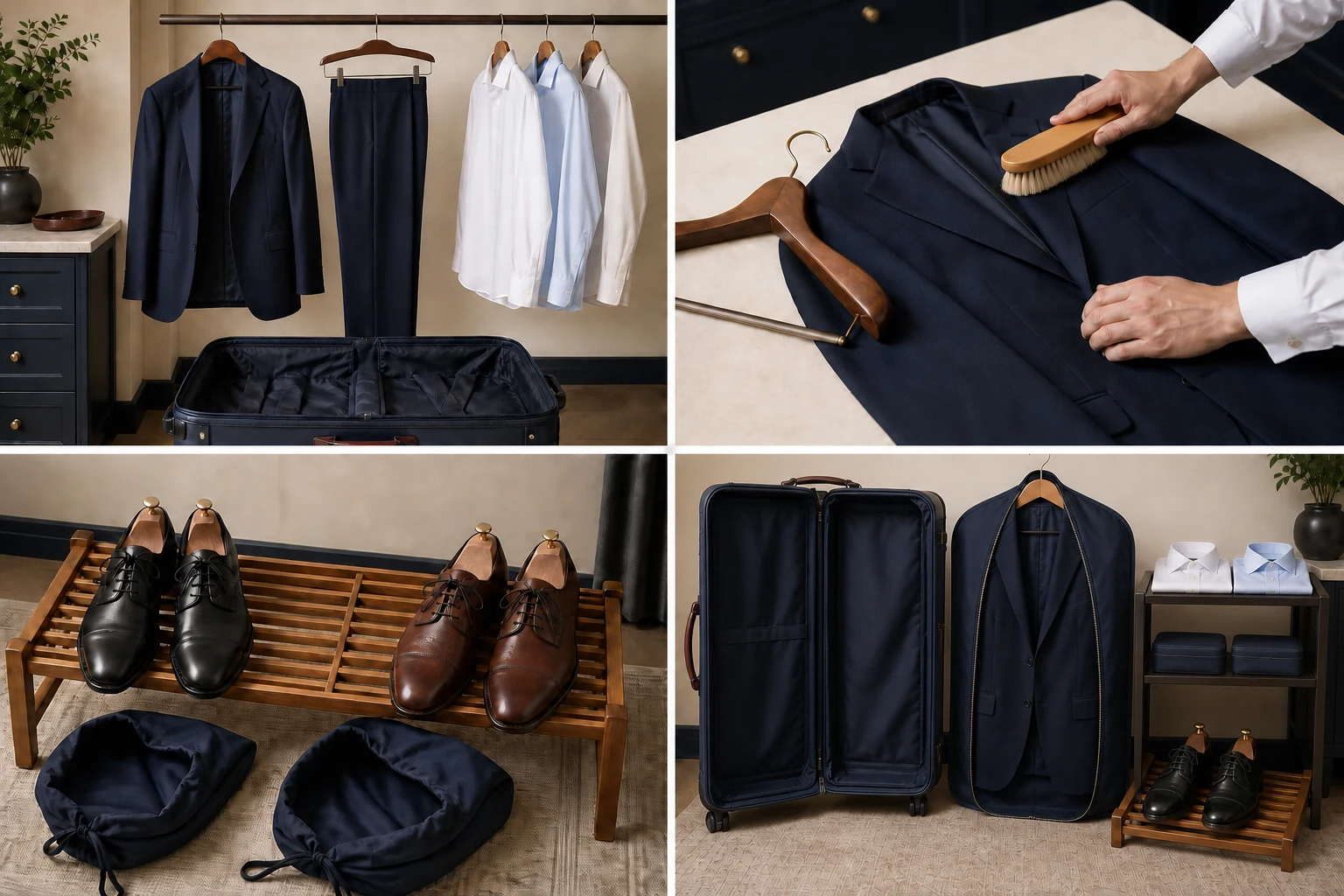
Pack suits and shirts with structure intact
Reduce hard folds, cushion pressure points and unpack promptly.
Compare the visible differences in pack suits and shirts with structure intact: proportion, material, finish and behaviour in use.
Reduce hard folds, cushion pressure points and unpack promptly.
“Could you show me how the choices in pack suits and shirts with structure intact change the result for my use, climate and preferred formality?”
Suit
Turn one shoulder gently inside out, nest the other shoulder into it and fold once with tissue or soft clothing at the crease—or use a proper garment bag.
Trousers
Align the creases, fold along the front and back lines and avoid heavy objects across the thigh.
Shirts
Button the front, fold sleeves cleanly, support the collar and alternate directions in the stack.
Protection
Use breathable covers for long journeys and a water-resistant outer layer where luggage exposure is possible.
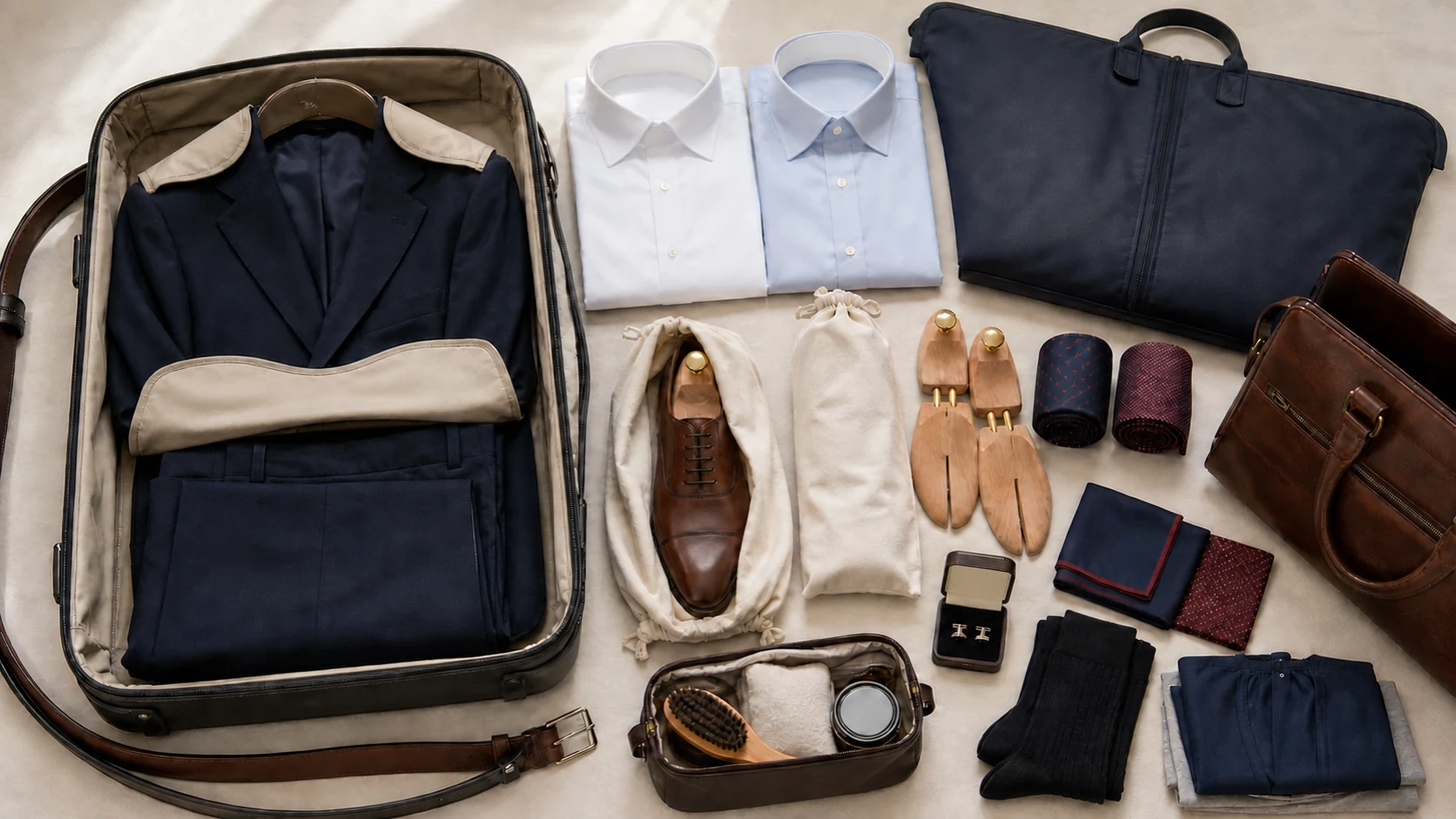
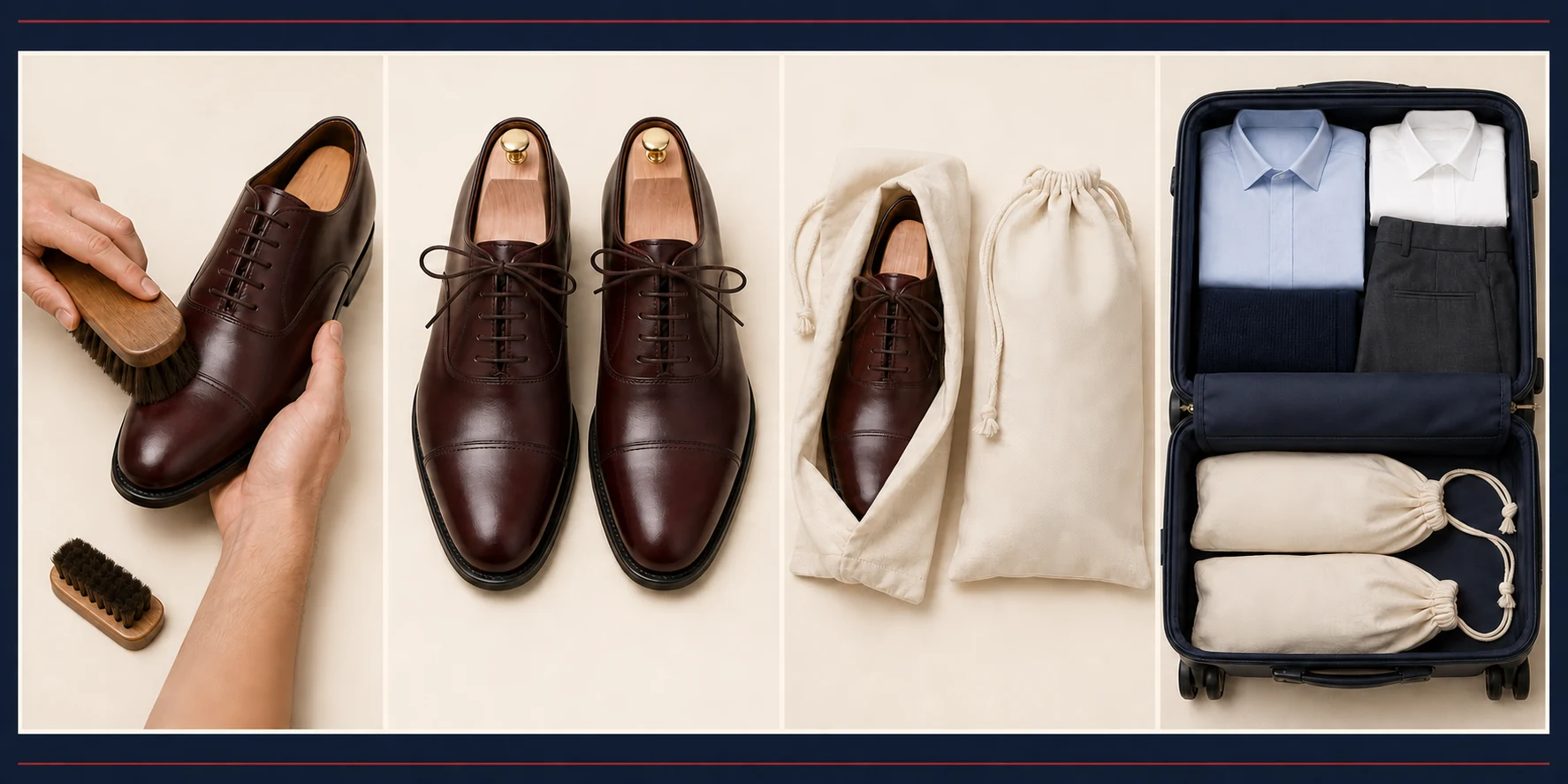
Protect shoes and small pieces
Shoes can crush garments and hardware can mark leather, so isolate both.
Compare the visible differences in protect shoes and small pieces: proportion, material, finish and behaviour in use.
Shoes can crush garments and hardware can mark leather, so isolate both.
“Could you show me how the choices in protect shoes and small pieces change the result for my use, climate and preferred formality?”
Shoes
Clean first, insert light trees or rolled socks, place each shoe in a bag and position soles away from cloth.
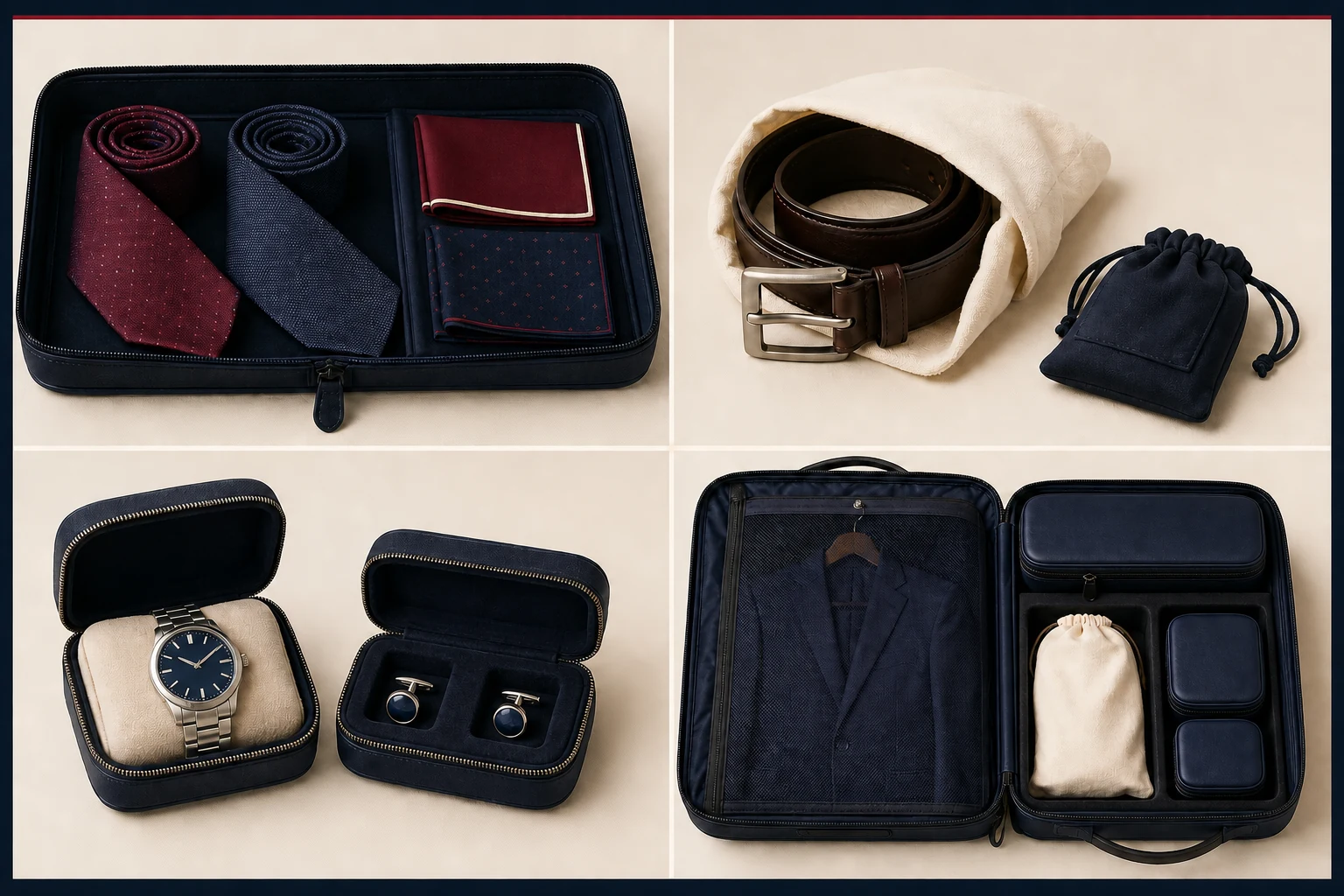
Ties
Roll loosely from the narrow end or fold once without a hard crease. Keep them away from liquids.
Pocket squares and socks
Use a small pouch so fine edges and pairs remain organised.
Watches and cufflinks
Use padded individual compartments; never leave hard metal loose against a watch or polished leather.
Use the right bag for each risk
Hand luggage protects the irreplaceable; checked luggage holds the replaceable.
Compare the visible differences in use the right bag for each risk: proportion, material, finish and behaviour in use.
Hand luggage protects the irreplaceable; checked luggage holds the replaceable.
“Could you show me how the choices in use the right bag for each risk change the result for my use, climate and preferred formality?”
Briefcase
Keep passport, documents, device, charger and one presentation-ready layer accessible without overloading the handles.
Carry-on
Prioritise a spare shirt, underwear, essential toiletries within liquid rules and one compact care kit.
Checked bag
Use packing cubes or cloth bags to separate footwear and protect corners from shifting hard items.
Care during and after travel
Unpack is a care step, not an administrative chore.
Compare the visible differences in care during and after travel: proportion, material, finish and behaviour in use.
Unpack is a care step, not an administrative chore.
“Could you show me how the choices in care during and after travel change the result for my use, climate and preferred formality?”
On arrival
Hang garments, remove shoe bags, air everything and use bathroom steam only cautiously—never soak or overheat cloth.
Quick refresh
Brush the suit, spot-check collars and cuffs, and polish only where needed.
After return
Dry, clean and inspect before storage. Do not seal travel moisture inside covers or cases.
The final-door checklist
A calm departure begins with a physical check, not a memory test.
Compare the visible differences in the final-door checklist: proportion, material, finish and behaviour in use.
A calm departure begins with a physical check, not a memory test.
“Could you show me how the choices in the final-door checklist change the result for my use, climate and preferred formality?”
Wear
Suit or jacket, trousers, shirts, ties, belt or braces, socks, shoes, weather layer.
Carry
Briefcase, documents, wallet, watch, cufflinks, collar stays, pocket square, chargers.
Protect
Garment bag, shoe bags, stain cloth, small brush, shoe trees or stuffing, approved care products.
Confirm
Dress codes, laundry or pressing access, luggage limits, climate and one workable backup outfit.