Waxno

Words you can point to

Learn the artisan’s jargon.

Professional vocabulary is easier to remember when it is attached to a visible detail. Use this dictionary to recognise a term, compare nearby concepts and say it accurately in the workshop.
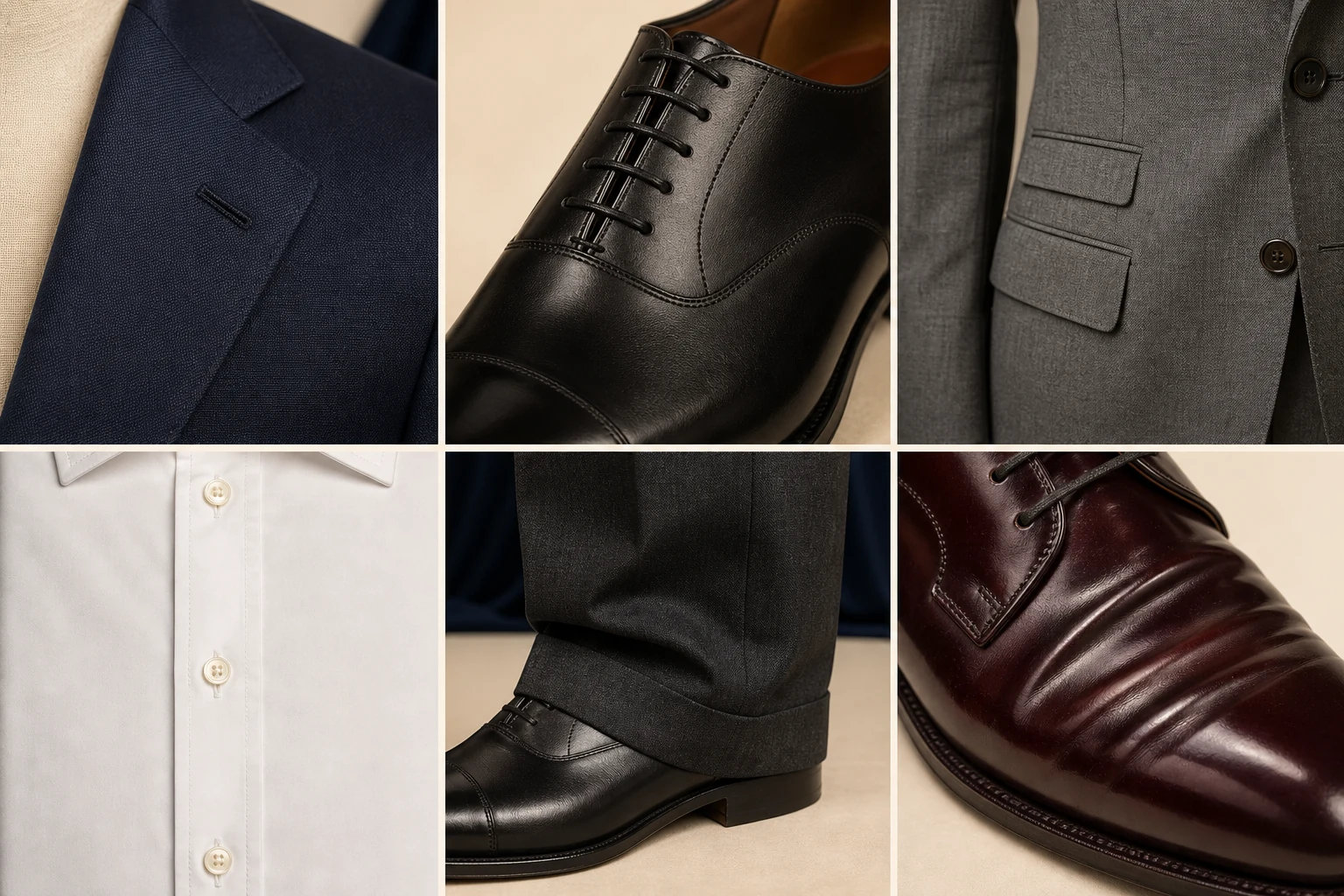
Close details illustrating lapel buttonhole, closed lacing, ticket pocket, shirt placket, trouser break and shell cordovan
Contents · Sections
01

Tailoring and shirtmaking

Use each term to describe an observable part or effect.

Use each term to describe an observable part or effect.
What to notice

Compare the visible differences in tailoring and shirtmaking: proportion, material, finish and behaviour in use.

Why it matters

Use each term to describe an observable part or effect.

What to say

“Could you show me how the choices in tailoring and shirtmaking change the result for my use, climate and preferred formality?”

Gorge

The seam where the jacket collar meets the lapel. “Could we keep the gorge balanced rather than unusually high?”

Lapel belly

The outward curve along the lapel edge. “I prefer a gentle belly rather than a very straight edge.”

Button stance

The height of the jacket’s main fastening button. “How will this button stance affect the apparent waist?”

Quarters

The lower front sections of a jacket and the shape of their opening. “I would like moderately open quarters.”

Scye

The armhole opening. A high, well-shaped scye can support movement without making the body excessively loose.

Pick stitching

Small visible stitches near an edge, functional in some handmade work and decorative in other construction.

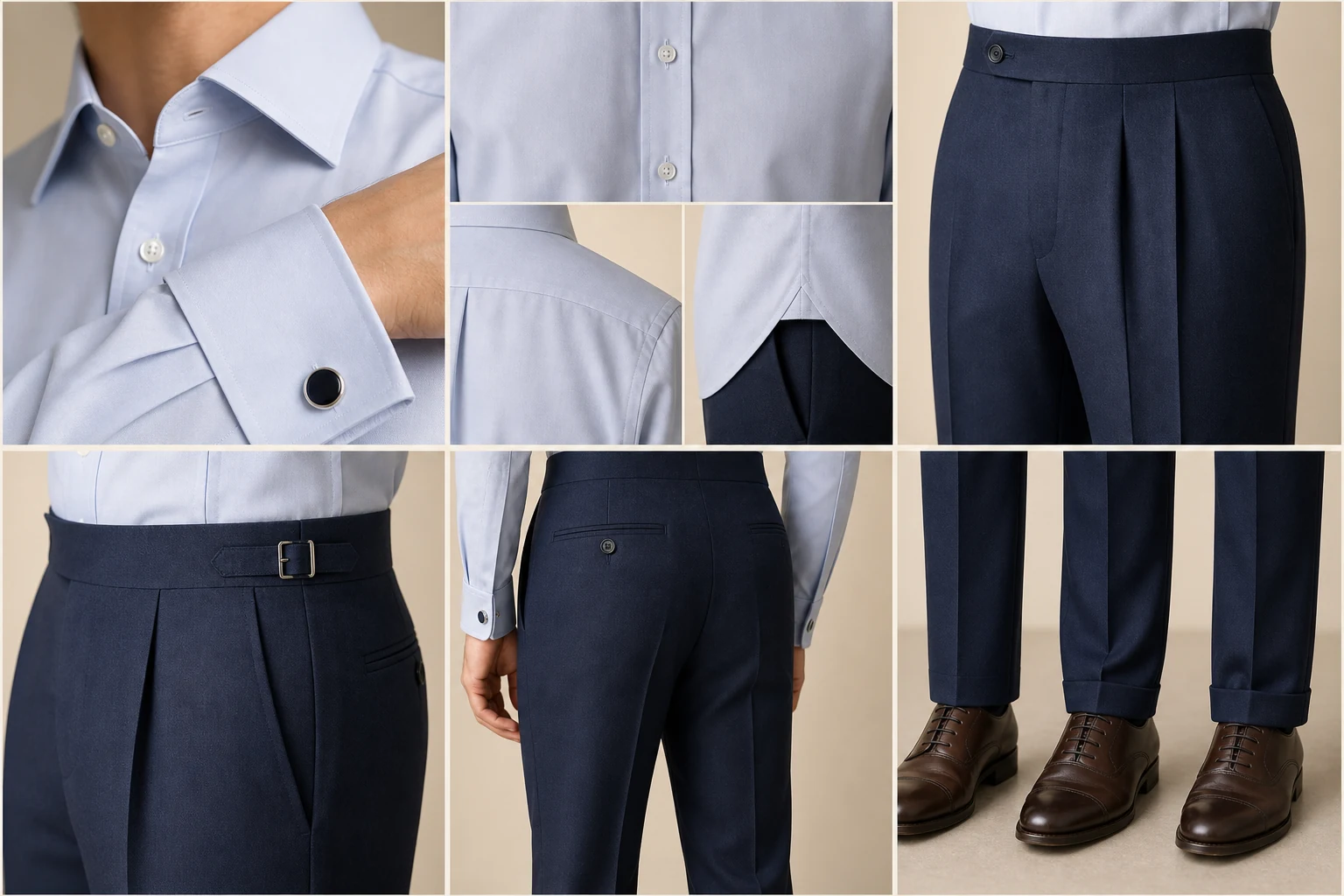
Ticket pocket

A small pocket above the right hip pocket, historically for tickets and now mainly a style detail.

Placket

The finished opening of a shirt front or sleeve. A front placket is visible; a French front is cleaner.

Break

The fold where a trouser hem meets the shoe: no break, slight, half or full. It depends on width and desired line.

02

Shoemaking

Lacing and construction terms help identify both style and fit.

Lacing and construction terms help identify both style and fit.
What to notice

Compare the visible differences in shoemaking: proportion, material, finish and behaviour in use.

Why it matters

Lacing and construction terms help identify both style and fit.

What to say

“Could you show me how the choices in shoemaking change the result for my use, climate and preferred formality?”

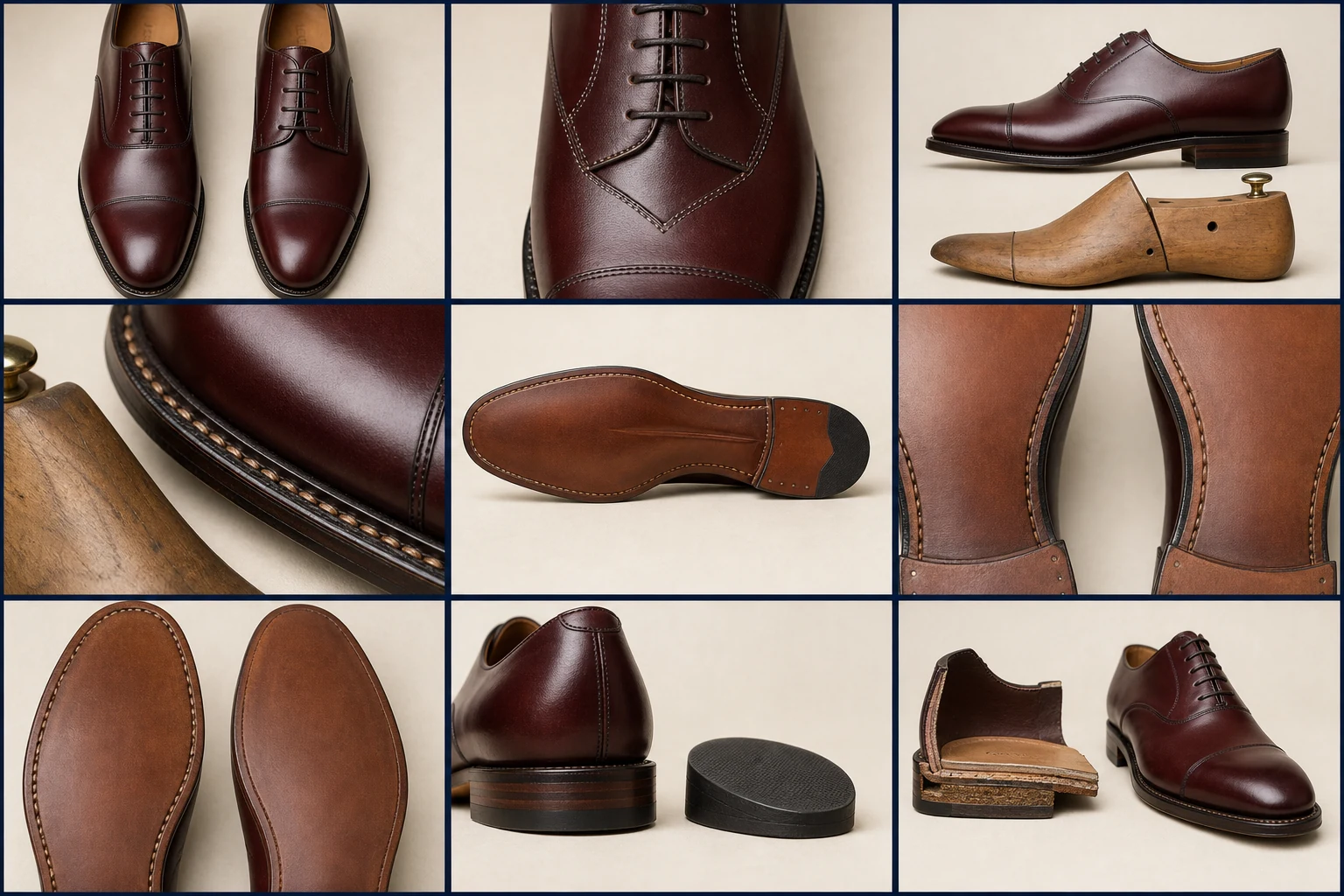
Closed lacing

The Oxford system in which quarters are stitched beneath the vamp, forming a V-throat.

Open lacing

The Derby system in which quarters lie over the vamp and can spread more freely.

Vamp

The front upper section covering the toes and forefoot.

Facing

The sections that carry the eyelets. Their gap can reveal how the last and instep volume relate.

Welt

A strip joining upper construction to the outsole in welted shoes.

Waist

The narrow sole area between forepart and heel. It may be close, bevelled or shaped into a fiddleback.

Last

The three-dimensional form around which a shoe is made; it determines far more than toe shape.

03

Leather craft

Material terms describe source, surface and finishing—not automatic quality.

Material terms describe source, surface and finishing—not automatic quality.
What to notice

Compare the visible differences in leather craft: proportion, material, finish and behaviour in use.

Why it matters

Material terms describe source, surface and finishing—not automatic quality.

What to say

“Could you show me how the choices in leather craft change the result for my use, climate and preferred formality?”

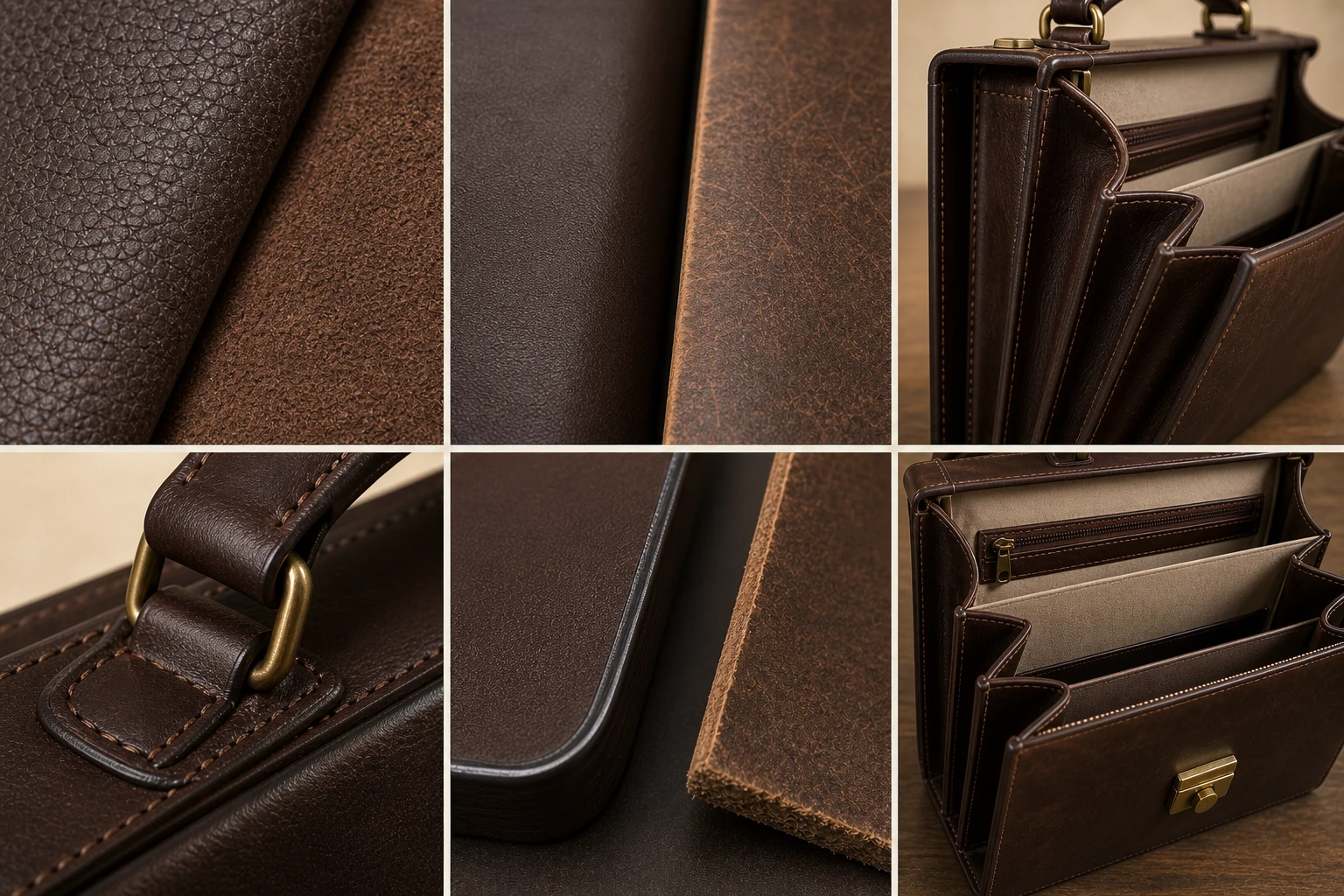
Full-grain

Leather retaining the natural grain surface, including its honest variation.

Corrected grain

A surface sanded to reduce imperfections and then finished for uniformity.

Nubuck

Grain-side leather lightly buffed for a fine velvety nap.

Suede

Split or flesh-side leather with a softer, more open nap.

Shell cordovan

Dense membrane from the horse rump, valued for lustre and broad rolling creases.

Patina

Change from light, handling, wear and care. Attractive patina is not the same as neglect or damage.

Skiving

Thinning leather at seams and folds so layers meet without excessive bulk.

Burnishing

Compressing and polishing an edge or surface to create a smooth finish and tonal depth.

Inspect image